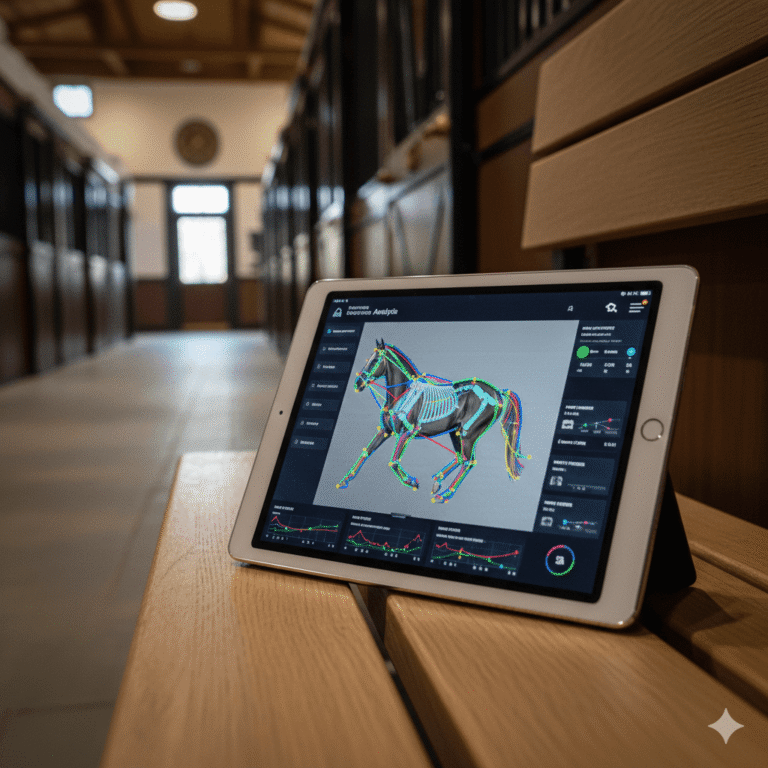
Equilab vs. Ridely: Which Equestrian App is Actually Worth Your Money in 2026?
Serious riders don’t need another gimmicky app. They need accurate data, practical training support, and something that won’t leave their phone dead halfway through a three-hour hack. In 2026, the Equilab vs Ridely 2026 debate comes down to a simple question: do you want a precision ride tracker or a structured training system in your pocket?
Both are leading equestrian training apps. Both have strong communities. Both require a subscription to unlock their real value. But they serve very different types of riders.
After analyzing technical specifications, current pricing models, and first-hand reports from active riders, here’s the no-fluff breakdown.
Executive Summary: Quick Comparison
| Feature | Equilab (2026) | Ridely (2026) |
|---|---|---|
| Best For | Trail riders, eventers, data-driven riders | Dressage riders, structured learners, fitness-focused owners |
| Top Feature | Automatic gait detection + Safety Tracking | Massive filmed training exercise library |
| GPS Tracking | Excellent, intuitive, detailed | Functional but secondary |
| Battery Impact | High on long rides | Moderate |
| Free Version | Basic tracking | Limited content preview |
| Premium Value | Advanced analytics & safety tools | Full training programs & structured plans |
| Overall Feel | Clean, data-focused | Content-rich, slightly cluttered UI |
Bottom line:
- Choose Equilab if you care about tracking, safety, and ride analytics.
- Choose Ridely if you want guided training and structured fitness progression.
Deep Dive: GPS & Gait Analytics (Equilab’s Technical Edge)
When riders search for a serious horse riding fitness tracker, Equilab usually tops the list.
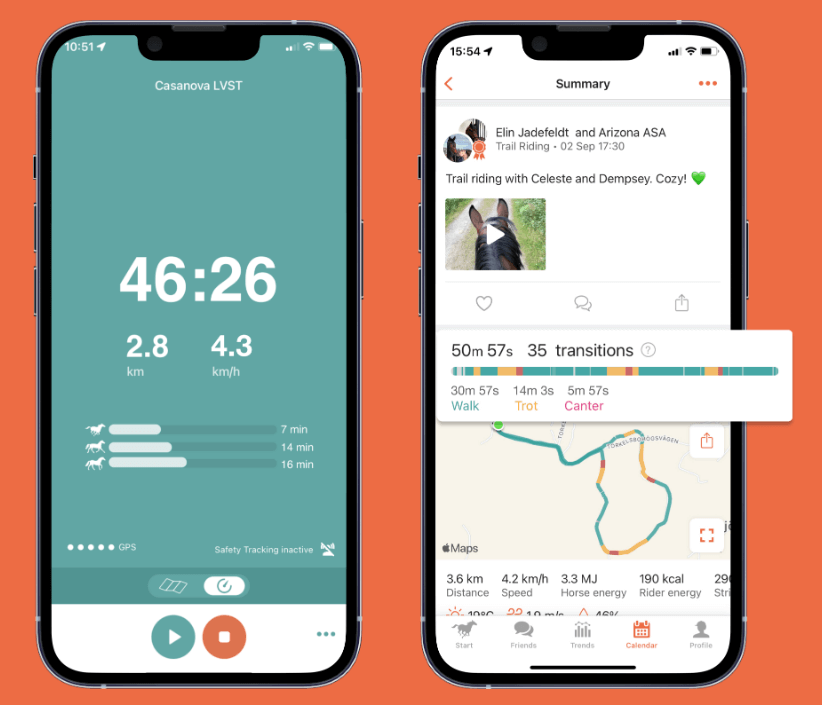
Superior Automatic Gait Detection
The consensus among dressage enthusiasts is that Equilab’s gait detection remains its strongest technical advantage. It automatically distinguishes:
- Walk
- Trot
- Canter
And it does so with impressive accuracy, even during transitions and mixed-terrain trail rides.
Equestrian testers switching from other platforms consistently report that Equilab provides higher precision, with fewer ‘false canters’ or missed trot sets compared to competitors.
For data-oriented riders — especially eventers and conditioning-focused amateurs — this matters. You can review:
- Time spent in each gait
- Average speed per gait
- Total distance
- Intensity distribution
That’s actionable data for conditioning programs.
Safety Tracking: Not a Gimmick
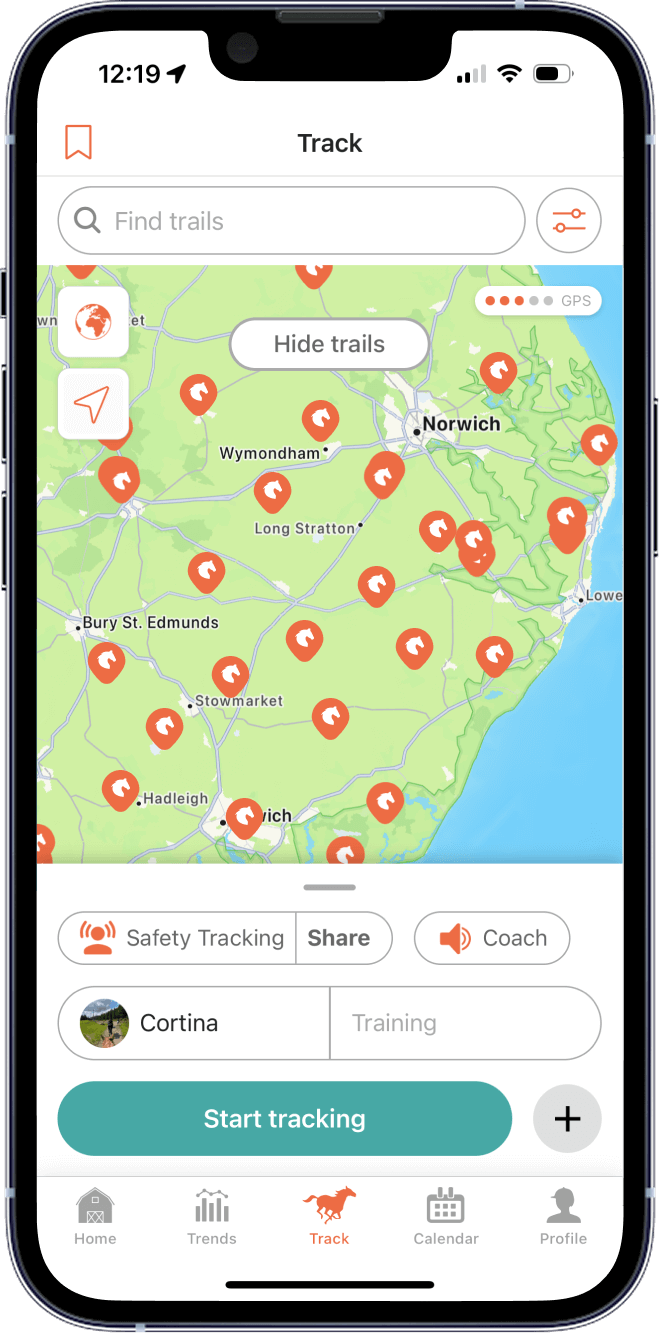
Equilab’s Safety Tracking feature remains one of the most practical tools for solo riders.
You can:
- Share live ride tracking
- Set emergency contacts
- Allow trusted people to monitor your route
If you ride alone on trails, this isn’t optional — it’s insurance.
Trail riders consistently mention that family members feel more comfortable knowing they can monitor rides in real time. For backcountry or remote hacking, this feature alone justifies Premium.
The Major Downside: Battery Drain
Now the criticism.
Active riders on the trail report that battery consumption is still a significant hurdle during long sessions. Three-hour trail sessions with full GPS tracking can drain 25–40% of a phone battery, depending on signal strength.
If you’re riding an all-day clinic or endurance conditioning session, you’ll need:
- A fully charged phone
- Battery saver mode
- Or a portable power bank
Equilab gives you excellent data, but it demands power.
Expert Tip: To mitigate Equilab’s high battery consumption, seasoned users recommend downloading offline maps for your riding area before heading out. This prevents the constant GPS “pinging” that aggressively drains power in areas with fluctuating signal strength.
Equilab Pros & Cons
Pros
- Highly accurate automatic gait detection
- Clean, intuitive GPS interface
- Excellent safety tracking
- Strong ride history analytics
Cons
- High battery consumption on long rides
- Premium required for meaningful data depth
- Less structured training guidance
Deep Dive: Training & Coaching (Ridely as “Coach in Your Pocket”)
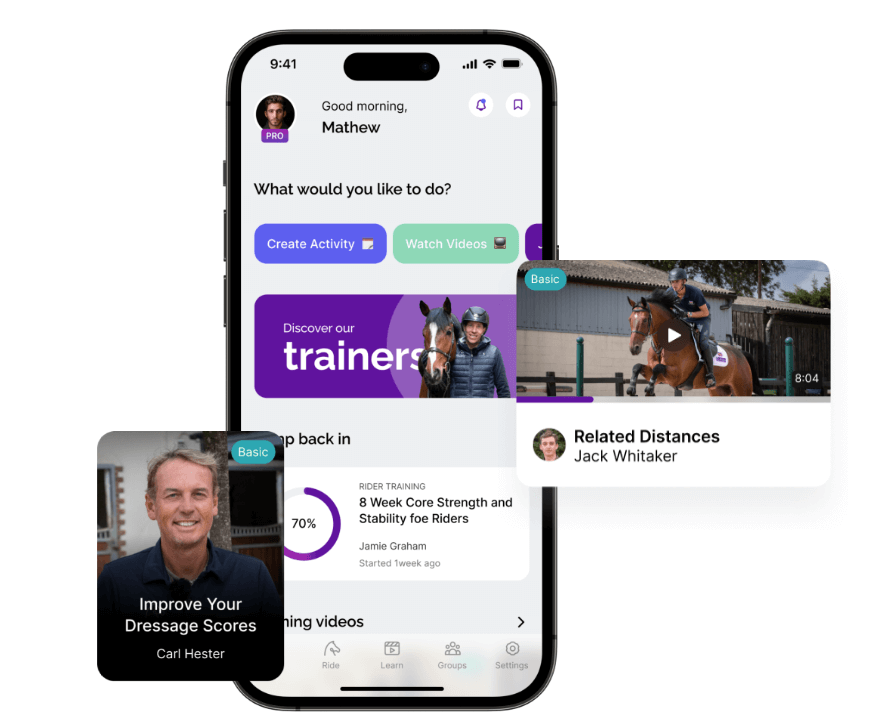
If Equilab is a data lab, Ridely is a digital trainer.
Ridely positions itself as a structured learning platform — and that’s not marketing fluff. It has one of the largest libraries among equestrian training apps in 2026.
A Massive Filmed Training Library
Ridely offers:
- Hundreds of filmed exercises
- Step-by-step dressage movements
- Rider position tutorials
- Structured training programs
App Store reviews from this season highlight that many amateur riders rely on Ridely between professional lessons to structure their schooling sessions.
Instead of wandering around the arena thinking, “What should I work on today?” you get guided exercises like:
- Improving trot lengthening
- Refining shoulder-in
- Building canter transitions
It’s especially strong for:
- Adult amateurs
- Riders without weekly trainer access
- Budget-conscious competitors supplementing fewer lessons
Structured Fitness Plans
Ridely also excels in planning.
You can:
- Set fitness goals
- Build progressive schedules
- Log completed exercises
- Track workload over time
App Store reviews from this season highlight that riders bringing horses back into work after injury find immense value in having a structured, guided progression plan instead of improvising their own.
The Downside: Cluttered UI for Simple Tracking
Ridely does offer GPS ride tracking — but it’s not the clean, analytics-first experience that Equilab provides.
Some users report:
- A busier interface
- More steps to start simple tracking
- A learning curve navigating between content and tracking
If all you want is to press “Start Ride” and go, Equilab feels smoother.
Ridely shines when you’re in “training mode,” not “quick hack mode.”
Ridely Pros & Cons
Pros
- Extensive filmed training library
- Structured programs for dressage & flatwork
- Excellent for rider education
- Strong fitness planning tools
Cons
- Interface can feel cluttered
- GPS tracking less intuitive
- Premium required for full content access
The Fitness Angle: Managing Your Horse’s Condition in 2026
The explosion of interest in equine fitness tracking isn’t random.
Search growth for terms like horse riding fitness tracker reflects a bigger trend: riders treating their horses more like athletes.
Detailed case studies in online equestrian communities—specifically those following trending fitness journeys on r/Equestrian—show that riders are increasingly using these tools to:
- Manage a mare’s weight loss program
- Gradually bring horses back after time off
- Track conditioning before competition season
- Prevent overtraining
How Equilab Fits Fitness Management
Equilab helps by:
- Measuring actual time in trot/canter
- Tracking ride frequency
- Monitoring workload intensity
For example, if your mare needs to increase cardiovascular fitness, you can quantify exactly how much trot work she’s getting per week.
Data-driven riders love this.
How Ridely Supports Weight & Conditioning Goals
Ridely supports fitness differently.
This isn’t just theoretical. In a recent trending discussion on the r/Equestrian subreddit, a rider documented her mare’s fitness journey, noting that Ridely’s scheduling tool was the “game-changer” for staying consistent with pole work—a practical training detail often missed by data-heavy trackers like Equilab.
Instead of just raw data, it offers:
- Structured conditioning exercises
- Progressive weekly plans
- Guided pole work sessions
- Strength-building flatwork routines
If your horse needs topline development or controlled weight loss, Ridely’s structured programs can keep you accountable.
The difference?
- Equilab = Measures the work.
- Ridely = Designs the work.
The Hidden Costs: Free vs Premium in 2026
Both apps operate on freemium models.
Equilab Subscription Reality
Free Version
- Basic ride tracking
- Limited analytics
Premium (2026 model)
- Advanced gait analytics
- Safety tracking features
- Long-term data insights
For serious riders, Premium isn’t optional — it’s required to unlock meaningful analysis.
Ridely Subscription Reality
Free Version
- Limited preview exercises
- Restricted training content
Premium (2026 model)
- Full training library
- Structured programs
- Progress tracking tools
Again, the real value sits behind the paywall.
User feedback from early 2026 indicates that most active users of either app subscribe — casual free users rarely stick long term.
The EquiApps Final Verdict
Choosing between these two powerhouses in 2026 comes down to your primary goal in the saddle:
Download Equilab if your priority is Safety and Stats. It is the gold standard for riders who want to know exactly how far they went and ensure someone is watching their back on solo trails.
Invest in Ridely if your priority is Education and Progression. It is the superior choice for riders who want professional homework and a structured path to a more athletic horse.
The Pro Move: Many high-level stables now use both—Equilab for the raw performance data and Ridely for the daily schooling “prescriptions.”
Which app are you currently using for your horse’s fitness journey? Share your experience in the comments below!