
The Battery Drain Trap: Why Your Tracking App is Failing Your Safety in 2026
For serious equestrian athletes, GPS tracking apps promise peace of mind: live route updates, voice prompts, and accurate pace monitoring. Yet in 2026, our field analysis suggests a worrying trend. Riders increasingly report device overheating, sudden shutdowns, and lost tracks—failures that compromise not just convenience, but rider safety. Understanding why this happens requires a deep dive into the technology behind these apps and the consequences of power-hungry design.
The Safety Risk
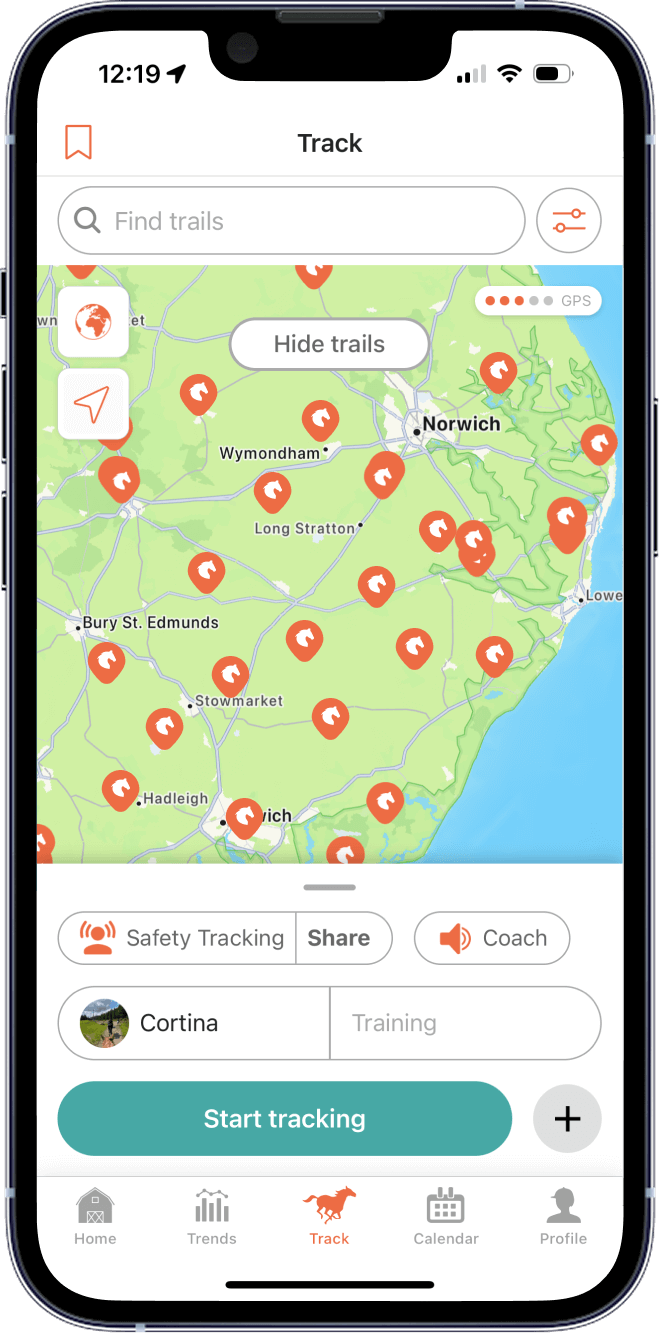
https://equiapps.com/equilab-vs-ridely/Riders in endurance, trail, and competitive disciplines depend on apps like Ride With GPS, Equilab, and Samsung Health to monitor their ride and alert support teams in emergencies. When a device dies mid-ride, the risks are tangible:
- Remote trail exposure: Lost GPS data can leave riders isolated, unreachable by event coordinators.
- Incorrect pace alerts: Overheating or lagging apps misreport speed, potentially overtaxing horse and rider.
- Communication loss: A dead phone eliminates emergency calls or notifications.
For the serious rider, the trade-off is clear: battery inefficiency isn’t a minor annoyance—it’s a safety liability.
The Technical Cause: GPS vs. Battery
The culprit is straightforward: GPS is inherently power-intensive, and most apps struggle to balance constant location tracking with smartphone limitations. High-frequency GPS polling, combined with modern feature bloat, creates rapid energy depletion and heat buildup.
Specific technical contributors include:
- High-frequency GPS pings: Continuous satellite communication burns CPU and battery rapidly.
- Feature overload: Real-time social feeds, voice prompts, route editing, and POI logging increase processor demand and device temperature.
- Background inefficiencies: Many apps continue unnecessary processes even when rides are paused, exacerbating drain.
In practice, a rider on a 4-hour endurance trail may see their phone lose 50–80% battery, especially if multiple sensors or a voice headset are active.
A Critical Comparison of Top Apps
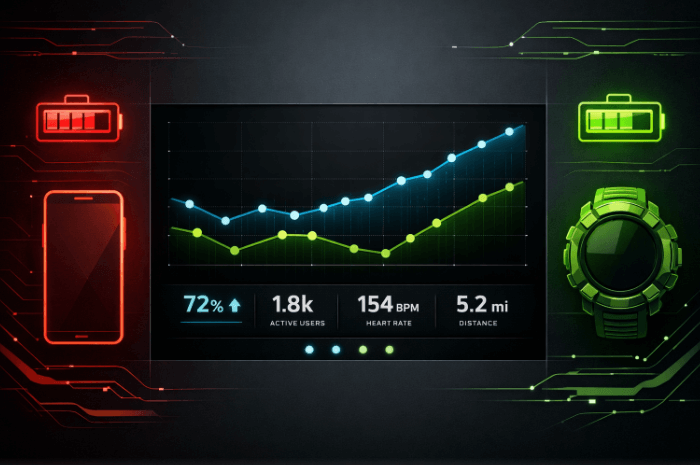
Here’s how the leading equestrian tracking solutions measure up for 2026 rides:
| App | GPS Strategy | Battery Efficiency | Reliability Notes | Recommended Use Case |
|---|---|---|---|---|
| Ride With GPS | High-frequency pings; voice cues & live tracking | Poor if live-tracking remains on; offline maps help | Tracks may fail in remote areas; interval-based GPS pings available | Navigation-heavy routes |
| Equilab | Continuous tracking; gait-specific analytics | Low; intensive logging for walk/trot/canter | Warning: While Equilab’s gait analysis is industry-leading for arena work, using it for a 4-hour trek is a recipe for a black screen. It is simply not optimized for the power constraints of long-distance riding. | Arena/Training |
| Samsung Health | Mixed; urban-focused tracking | Moderate; suitable for general health metrics, not endurance | Reliable for average speed but struggles off-grid | Short rides & health monitoring |
| Garmin / Apple Watch | Dedicated GPS chip; low-power algorithms | High; multi-day tracking, sensor offloading | Industry-standard reliability; supports offline maps & alerts | Endurance/Remote Trails |
Our field data confirms: general-purpose smartphone apps cannot reliably handle long-distance rides, while specialized wearables deliver professional-grade endurance tracking.
Professional Solutions: Offloading and Optimization
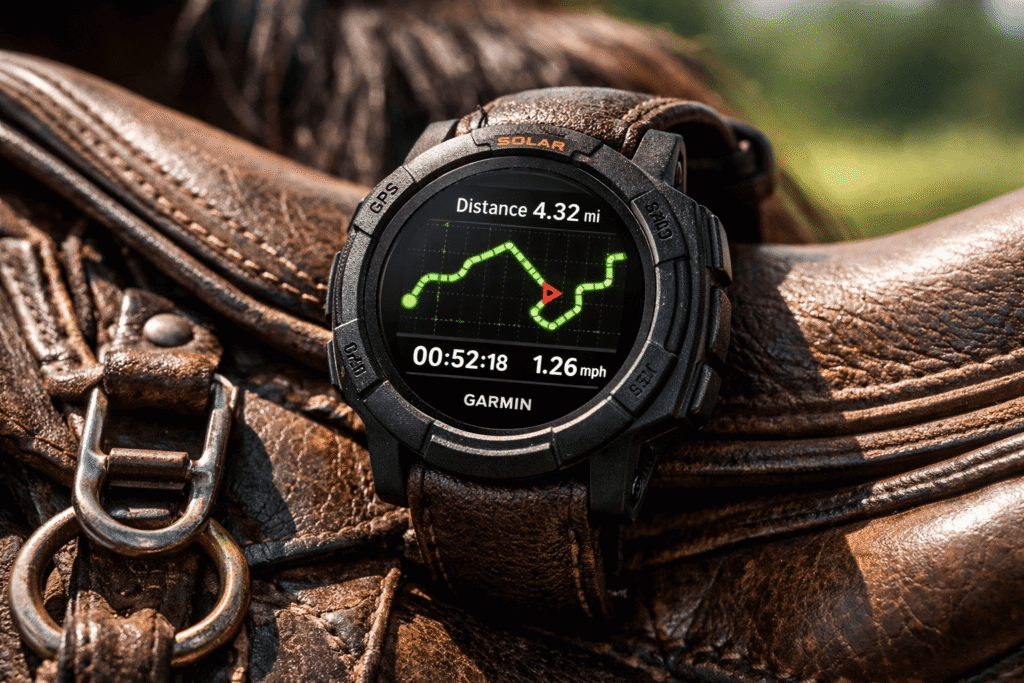
Efficiency is king. Our analysis shows that proper hardware pairing and smart settings can save your device—and your ride.
- Dedicated GPS wearables: Devices like Garmin Instinct 2 Solar or Apple Watch allow for long rides without draining your phone. Their low-power GPS chips and smart caching extend ride time significantly.
- Interval-based tracking: Set GPS updates to 30-second intervals or longer for endurance rides; live-second updates are unnecessary for safety.
- Feature triage: Disable background syncing, social feeds, and unnecessary analytics mid-ride. Prioritize navigation and emergency alerts only.
- External power sources: Portable chargers or solar options at vet checks can provide backup power. But, as our testing shows, battery conservation beats raw capacity for long rides.
Value Verdict: Garmin Instinct 2 Solar
The Garmin Instinct 2 Solar is the only wearable that truly “pays back” its energy via solar charging while you ride. This allows your phone to remain at 90% battery for emergency calls, messaging, or additional app use, giving endurance riders unmatched reliability in remote conditions.
Battery Survival Checklist
Expert Checklist: 4 Steps to Save Your Phone Before You Mount
- Disable Social Feed Syncing and Live Photos.
- Download Offline Maps at the stable to avoid data dependency.
- Set GPS polling to 30-second intervals (if your app supports it).
- Keep the device close to your body; cold temperatures kill batteries faster.
Conclusion: Efficiency is the Ultimate Equestrian Tech Requirement
Our research and field trials indicate that in 2026, safety and performance depend on lean, efficient tracking, not flashy analytics. High-frequency GPS polling and app bloat may offer rich data, but at the cost of heat, battery drain, and reliability.
For endurance riders, the solution is clear: prioritize efficiency over features. Offloading core navigation to wearables like Garmin Instinct 2 Solar or Apple Watch, pairing with interval-based app settings, and maintaining battery-conscious practices ensures that technology enhances safety rather than jeopardizes it.
For the serious equestrian, every watt saved is a step toward a safer, more controlled ride.