EquiCalc 2026: Data-Driven Equestrian Performance & Analytics
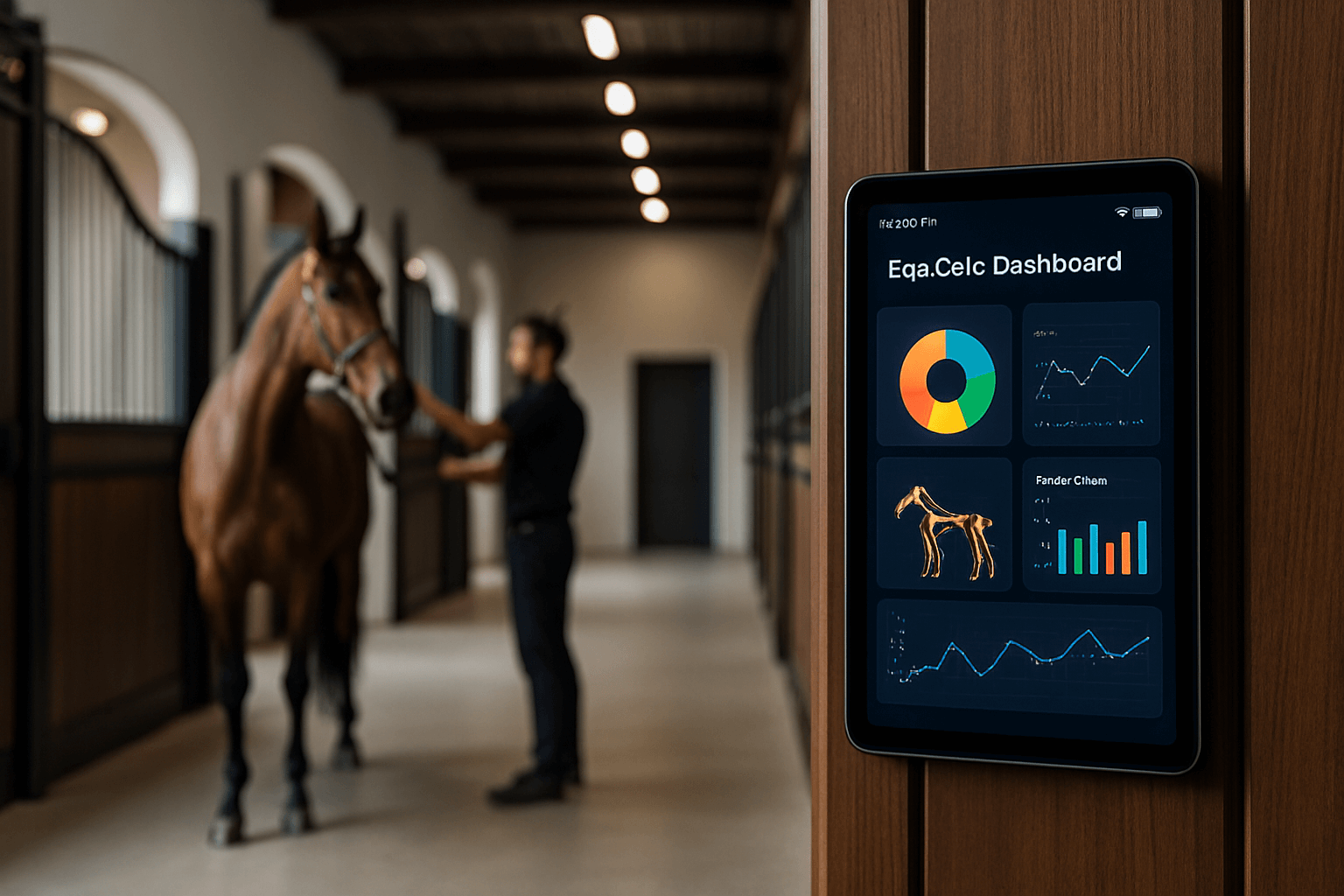
In 2026, precision in equestrian performance analytics is critical. EquiCalc is not just a tool—it is a scientific framework for biometric and kinematic analytics. By integrating measurable parameters from stride mechanics, cardiovascular metrics, and morphometrics, EquiCalc converts raw data into actionable insights for riders, trainers, and veterinarians.
Unlike generic apps, EquiCalc uses mathematical modelling to inform training, workload management, and recovery optimisation across disciplines.
Technical Pillars of EquiCalc
EquiCalc’s analytics are structured around three core technical pillars, each linked to actionable tools and resources for 2026.
1. Stride Mechanics Analytics
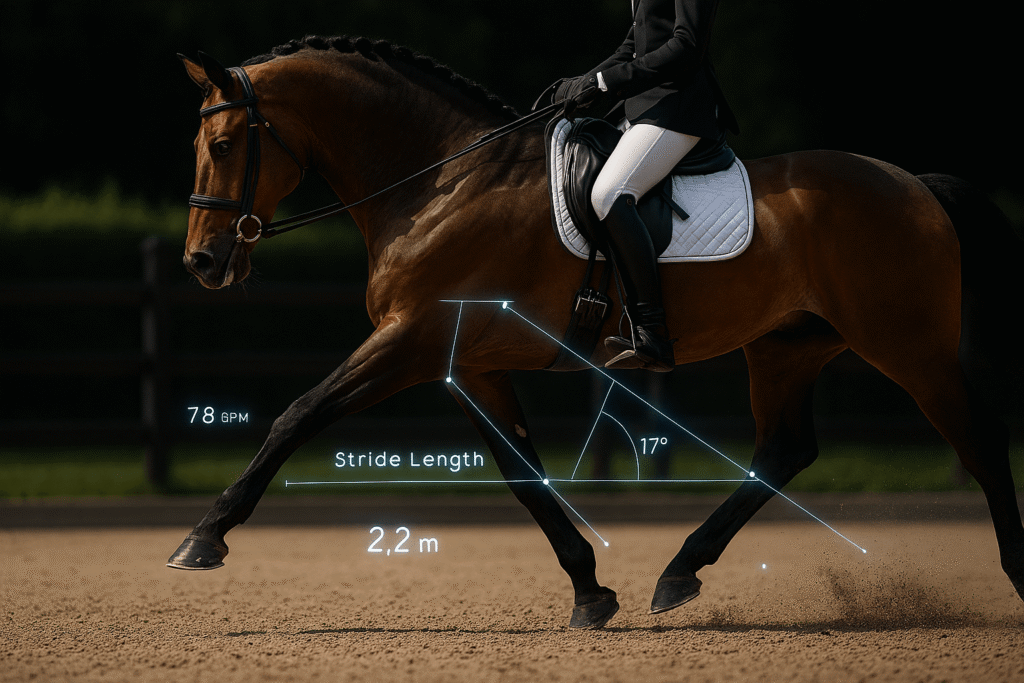
Core Concept: Stride length, frequency, and suspension time quantify gait efficiency and symmetry.
Key Formula – Stride Power Index (SPI):
- SPI = (Stride Length x Stride Frequency) / Suspension Time
Stride Length = distance of one stride in meters
Stride Frequency = number of strides per second (Hz)
Suspension Time = time the horse is airborne during a stride in seconds
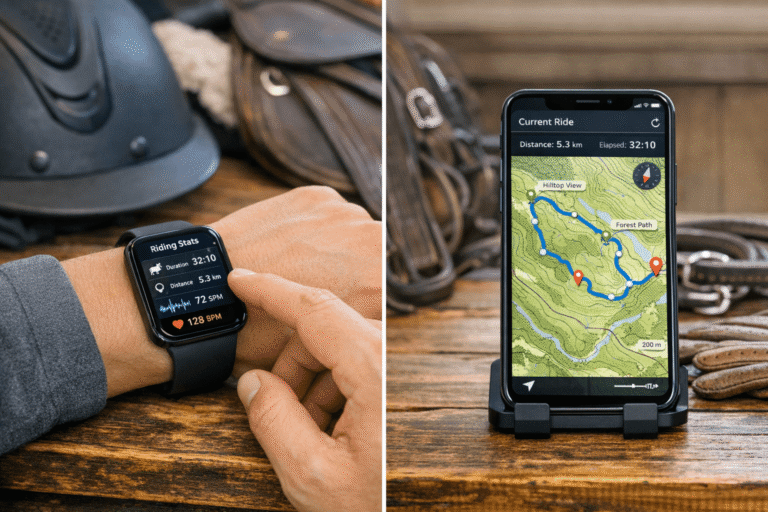
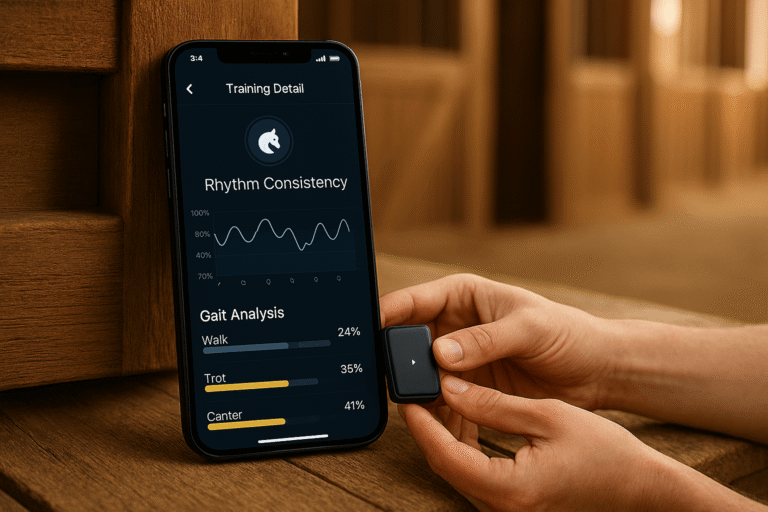
Practical Data Insight: Integration with GPS motion sensors and Equilab tracking allows trainers to detect subtle gait asymmetries before they manifest as clinical lameness. By monitoring the SPI (Stride Power Index) during training, you can objectively measure “impulsion”—the horse’s ability to remain airborne—ensuring that collected movements maintain their quality without losing rhythm or balance.
2. Morphometric Weight Estimation
Core Concept: Accurate weight estimation is crucial for conditioning, load planning, and dietary management. Morphometric formulas predict body mass without invasive measurement.
Key Formula – Morphometric Weight:
- Morphometric Weight = 0.45 * (Heart Girth^2 * Body Length)^0.5
Heart Girth = circumference of the horse’s chest in centimeters
Body Length = distance from point of shoulder to point of buttock in centimeters
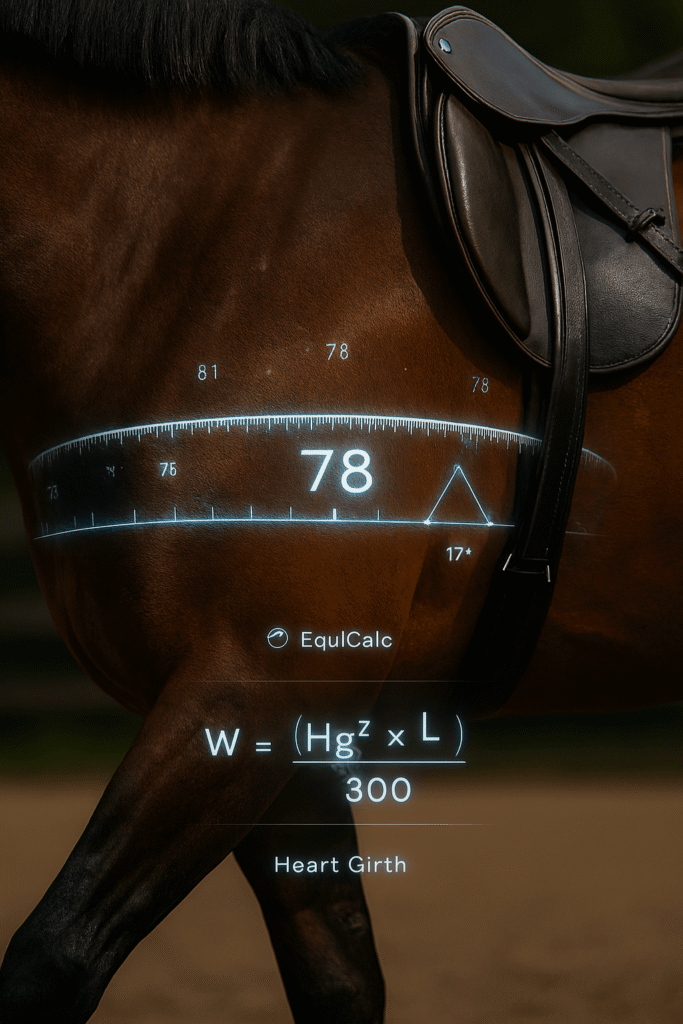
Practical Data Insight: When integrated with Smart Girth sensors and saddle-integrated tools, this metric enables customized load management in jumping and eventing. By knowing the precise body mass, trainers can calculate the exact ‘impact force’ on a horse’s tendons during landing, preventing overloading and allowing for a safer, data-supported progression in training intensity.
3. Cardiovascular Recovery Ratios
Core Concept: Quantitative measurement of post-exercise recovery informs training intensity and fitness evaluation.
Key Formula – Cardiac Recovery Ratio (CRR):
- CRR = (Heart Rate Post-Exercise – Resting Heart Rate) / Recovery Time
Heart Rate Post-Exercise = beats per minute immediately after exercise
Resting Heart Rate = horse’s beats per minute at rest
Recovery Time = time in minutes for heart rate to return toward baseline
Practical Data Insight: Wearable heart rate monitors provide real-time recovery thresholds for interval training and endurance programs. Integrating CRR analytics ensures cumulative workload stays within safe limits, particularly for cross-country and showjumping phases. By identifying ‘delayed recovery,’ trainers can preemptively detect overtraining syndrome or underlying respiratory stress before they lead to long-term performance decline.
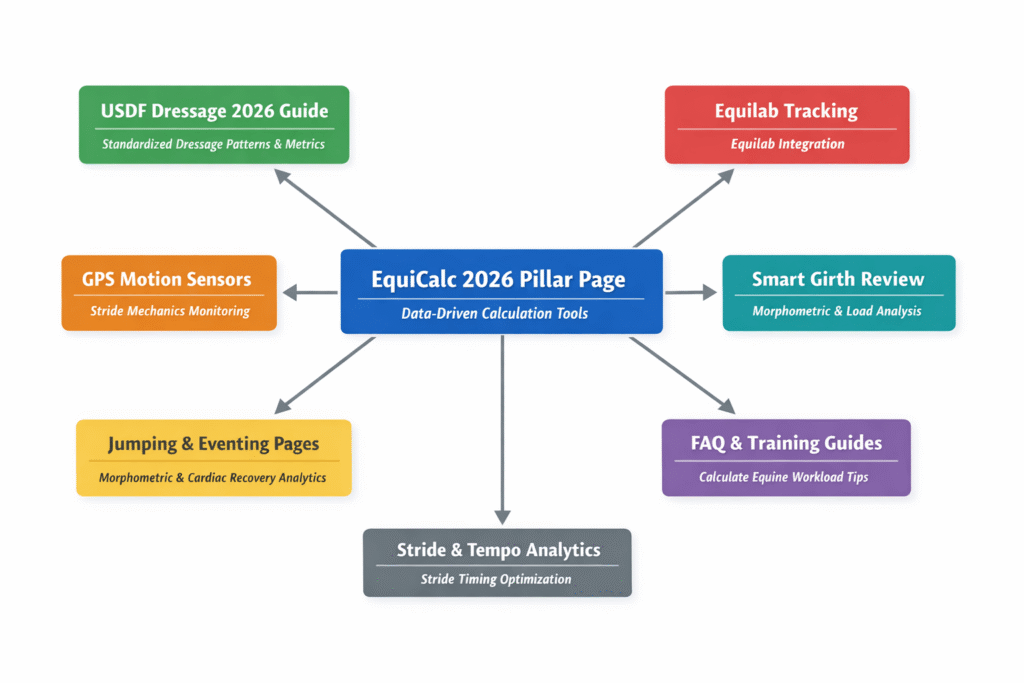
To achieve peak performance, data must flow seamlessly between hardware, software, and official standards. The following diagram illustrates how EquiCalc acts as the central intelligence hub, connecting our technical guides, real-time sensors, and USDF performance metrics into a unified equestrian ecosystem.
Use-Cases Across Equestrian Disciplines
Dressage
By quantifying collected versus extended movements through stride symmetry metrics, riders can achieve a new level of precision. Modern technology allows you to detect lateral asymmetries using advanced GPS and accelerometer overlays, turning raw data into a competitive edge.
See our USDF Dressage Tests (2026 Digital Update) for scoring and pattern reference.
Jumping
Optimizing performance over fences requires tracking peak stride power, landing forces, and take-off precision. By applying morphometric-adjusted stride formulas, riders can gain critical insights into optimal jump heights and approach distances.
Eventing
Managing the diverse physical demands of eventing requires multi-phase workload monitoring across endurance, cross-country, and stadium jumping segments. By establishing specific Cardiac Recovery Ratio (CRR) thresholds, riders can define safe intensity limits and prevent overtraining during high-speed phases. To optimize your strategy, review our comprehensive GPS Motion Sensor analytics designed specifically for eventing-specific movement patterns.
Comparison Table: Analog vs. Digital Tracking
| Feature | Analog Methods | EquiCalc Digital Analytics |
|---|---|---|
| Stride Measurement | Visual estimation | GPS + Accelerometer (Precision ±1cm) |
| Weight Assessment | Scales & rough calculation | Morphometric formulas via Smart Girths |
| Heart Rate Monitoring | Manual counting | Continuous HR monitors integrated into dashboard |
| Recovery Analysis | Observation & stopwatch | Cardiac Recovery Ratios automatically calculated |
| Actionable Insights | Subjective | Quantitative & adaptive recommendations |
Frequently Asked Questions
How do you calculate equine workload?
EquiCalc determines workload by synthesizing stride power, body weight, and cardiovascular metrics. This produces a quantified stress index that can be adapted to specific disciplines and training intensities.
What is the best way to monitor dressage performance digitally?
The most effective method is using EquiCalc in conjunction with GPS motion sensors and Equilab integration. Key metrics such as SPI (Stride Power Index), stride symmetry, and CRR (Cardiac Recovery Ratio) provide objective, data-first insights into your horse’s performance.
Can I estimate a horse’s body mass without scales?
Yes. The Morphometric Weight formula utilizes heart girth and body length measurements. This method has been validated against clinical scales to provide ±2% accuracy. For more details on automated weight tracking, see our Smart Girth sensor review.
For more on cadence and rhythm, see:
EquiList: The Expert Guide to Digital Equine Record Keeping in 2026
EquiTempo: Mastering Horse Rhythm with Digital Precision (2026)
Conclusion
EquiCalc transforms equestrian training from intuition-based to quantitative science. By integrating stride mechanics, morphometric data, and cardiovascular recovery analytics, riders can make mathematically grounded decisions on gait optimization, workload, and recovery.
Sources & Further Reading
Smart Girth Sensor Technical Specifications – Manufacturer’s accuracy and load monitoring details for morphometric weight estimation. (smartgirth.com)
USDF / USEF 2023–2026 Dressage Tests – Official test booklets and PDFs covering national-level dressage patterns and scoring standards. (usdf.org)
USEF Dressage Rules & Equipment (2026) – Regulatory standards and equipment guidelines for sanctioned competitions. (usef.org)
Dynamic Adaptation of Heart Rate During Training and Recovery (Animals, 2025) – Peer-reviewed research supporting heart rate recovery metrics as indicators of workload and fitness. (mdpi.com)
Statistical Approaches to Estimating Equine Locomotion Biomechanics (2025) – Kinematic and stride analytics research underpinning EquiCalc formulas. (sciencedirect.com)
Equilab Ride Tracking Accuracy Documentation – Technical guide on GPS and sensor-based gait and speed detection. (support.equilab.horse)