EquiList: The Expert Guide to Digital Equine Record Keeping in 2026
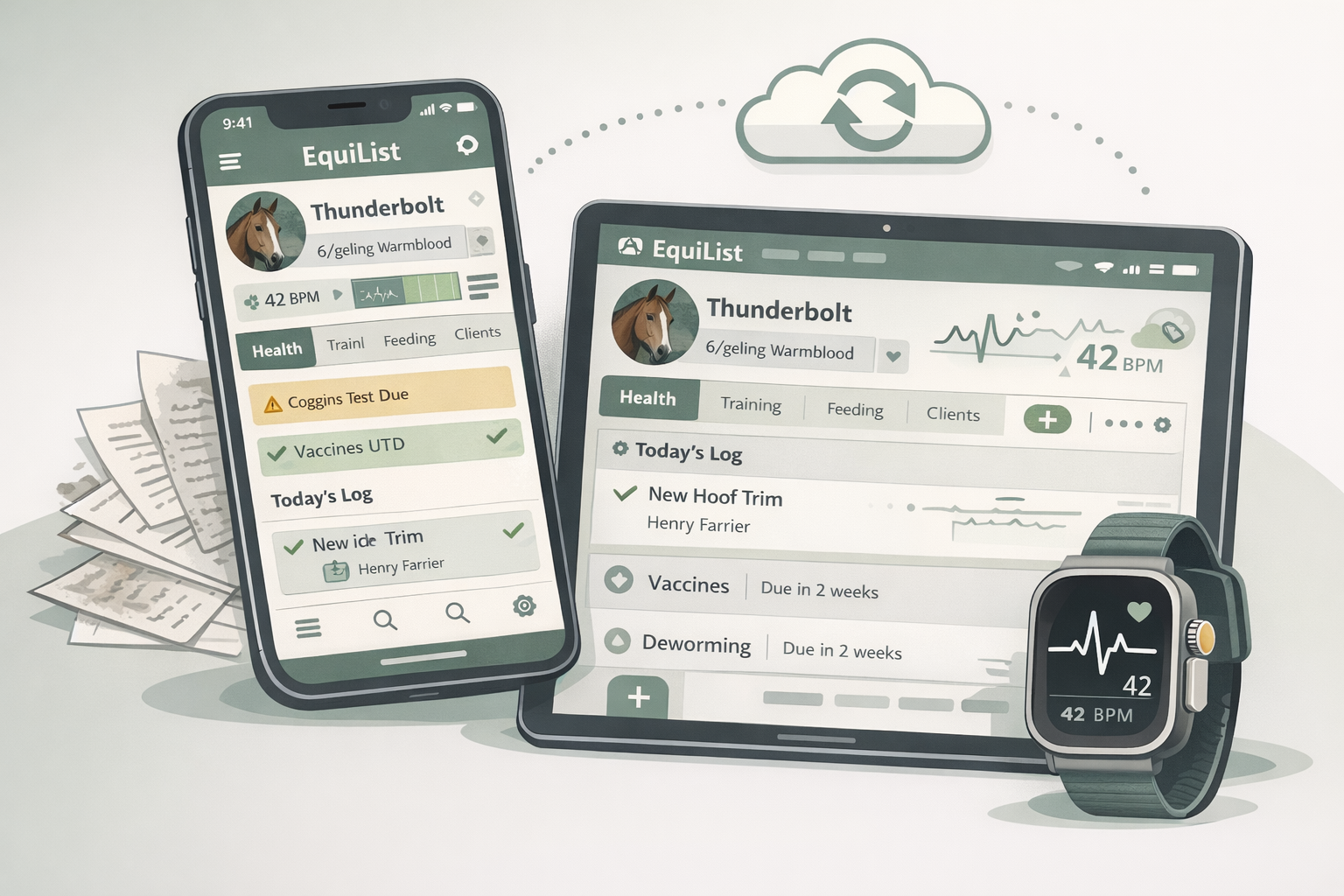
Imagine a 2 AM emergency where every second counts, and a veterinarian calls asking for sedation records while you fumble through a mud-stained paper notebook. In 2026, equine record keeping is the difference between chaos and life-saving precision.
EquiList transforms scattered logs and handwritten notes into a structured digital framework, giving you instant access to medical histories, farrier cycles, and nutritional data—all synced, searchable, and ready for action. No more illegible entries, lost pages, or delayed treatment decisions; every piece of critical information is consolidated, timestamped, and securely stored in the cloud.
Comparison Table: Manual/Paper Records vs. The EquiList Digital Framework
| Feature / Requirement | Manual / Paper Records | EquiList Digital Framework (2026) |
|---|---|---|
| Accessibility | On-site only, physical files | Cloud-based access via mobile, tablet, desktop |
| Data Sharing | Manual copying or PDFs | Instant sharing with veterinarians, farriers, and staff |
| Update Frequency | Manual, often delayed | Real-time updates with automatic logging |
| Reminders & Alerts | None or manual notes | Automated notifications for vaccinations, deworming, farrier visits |
| Security & Backup | Prone to loss, damage, theft | Encrypted storage with version history and cloud backup |
| Search & Reporting | Time-consuming, error-prone | Searchable, sortable, and ready for reporting or compliance audits |
| Regulatory Compliance | Hard to enforce | Built-in adherence to state, national, and competition regulations |
| Integration with Analytics | Not feasible | Supports performance tracking, health trend analysis, and financial insights |
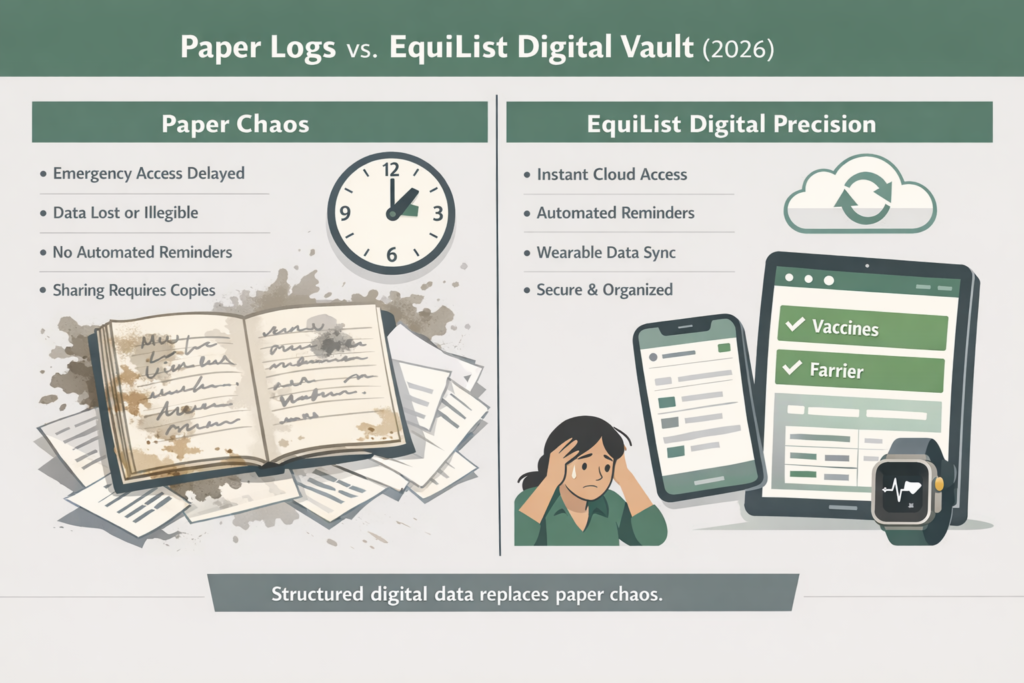
Actionable Sections
1. Medical History
Accurate medical records are the backbone of any equine operation. EquiList ensures each horse’s health data is comprehensive, centralized, and instantly retrievable. Key features include:
- Vaccinations and Deworming Schedules: Automated reminders ensure compliance with the AAEP Equine Vaccination Guidelines, alerting owners and staff before updates are due.
- Treatment Logs and Diagnostics: Radiographs, lab results, and veterinary notes are attached digitally, reducing miscommunication or lost paperwork.
- Emergency Access: Mobile-enabled records allow veterinarians to review histories during emergencies without delay.
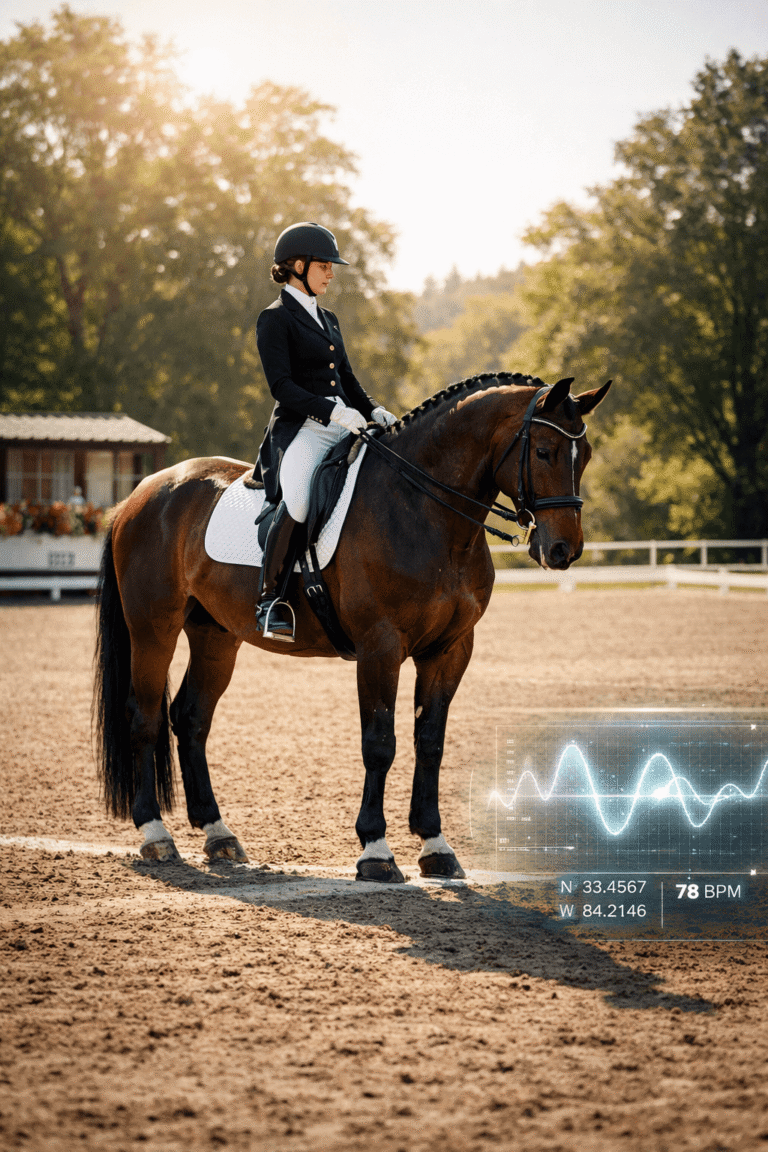
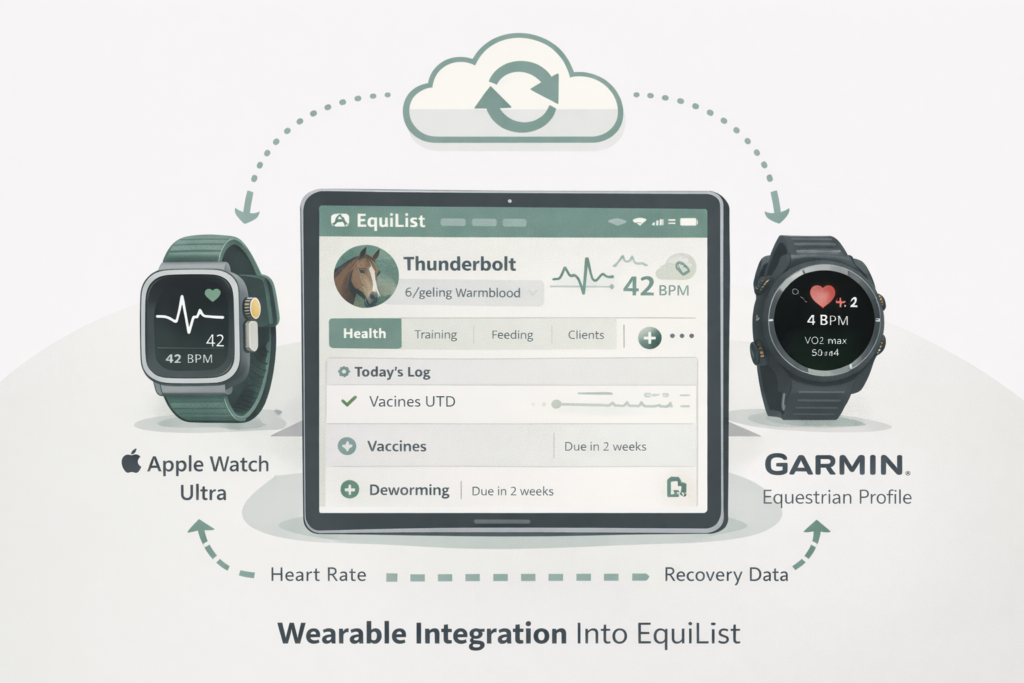
- 2026 Wearable Integration: EquiList now syncs directly with Apple Watch Ultra or Garmin equestrian profiles, automatically importing heart rate, recovery, and performance metrics into the health log. This transforms routine monitoring into a continuous, data-driven process.
- Legal Compliance: Every entry is timestamped and immutable, safeguarding against liability in audits, insurance claims, or regulatory inspections.
The Digital Transition Challenge
Moving from paper to a digital framework requires discipline. Every detail—health entries, farrier notes, dietary adjustments—must be logged consistently. This initial effort is non-negotiable, but the long-term benefits in safety, emergency readiness, and operational efficiency far outweigh the upfront commitment.
2. Farrier Cycles
Hoof care is critical to equine performance and well-being. EquiList transforms farrier scheduling from a manual log into a precise, trackable cycle:
- Digital Hoof Records: Track trimming, shoeing, corrective procedures, and notes from each session.
- Automated Alerts: Reminders notify farriers and barn staff when a horse is due for work.
- Shared Access: Farriers, trainers, and owners can review past treatments, enabling informed care decisions.
- Analytics: Monitor trends in hoof health over time, identifying potential issues before they become critical.
3. Nutritional Logs
Diet management requires precise records to optimize health and performance. EquiList introduces structured nutritional tracking:
- Daily Intake Logs: Record type, quantity, and schedule of feed, supplements, and water.
- Dietary Adjustments: Track changes based on veterinary advice, weight monitoring, or performance outcomes.
- Automated Notifications: Alerts prompt staff to update feeding schedules or administer supplements.
- Integration with Health Metrics: Correlate diet with weight, muscle condition, and metabolic health for data-driven decisions.
CTA: To implement the EquiList methodology effectively, you need the right software. Explore our Independent Analysis of the 12 Best Apps for Horse Owners to find your perfect match.
Conclusion
In 2026, effective equine care depends on data-driven management. Paper logs and static PDFs cannot meet the demands of modern veterinary practice, emergency readiness, or performance monitoring.
EquiList empowers horse owners, trainers, and veterinarians with structured, digital, and real-time record-keeping. From medical histories to farrier cycles and nutritional logs, the framework ensures accuracy, accessibility, and actionable insights, providing the foundation for elite equine welfare and operational efficiency.
Professional owners who embrace this disciplined, integrated system will have the only reliable pathway to safety, regulatory compliance, and high-performance care in the modern equestrian environment.
Scientific References & Technical Standards
- American Association of Equine Practitioners (AAEP) – Guidelines for medical recordkeeping, vaccination schedules, and veterinary compliance.
- Fédération Équestre Internationale (FEI) – Regulatory standards for competition, veterinary reporting, and performance horse documentation.
- United States Equestrian Federation (USEF) – Rules and protocols for national competitions, including veterinary and health record compliance.
- University of Maine: Equine Management Research – Foundational principles in horse farm record-keeping and operational efficiency.
- EquiApps (2026): Performance Metrics & Wearable Integration in Modern Equestrian Sport – Independent analysis of digital tools for health tracking, wearable syncing, and performance optimization.