EquiTempo: Mastering Horse Rhythm with Digital Precision (2026)
Editor’s Note
This resource has been a staple of the EquiApps library since 2011. For the 2026 season, we have streamlined and updated this guide to provide a concise, high-impact overview of the latest standards, ensuring you have the essential facts at your fingertips.
Most riders believe they have a steady hand and leg—but sensor data tells a harsher story: 90% of amateurs fluctuate their tempo by more than 5 BPM without realizing it. Feeling “in sync” with your horse is no longer sufficient in 2026. Elite equestrians demand objective, biometric rhythm analysis.
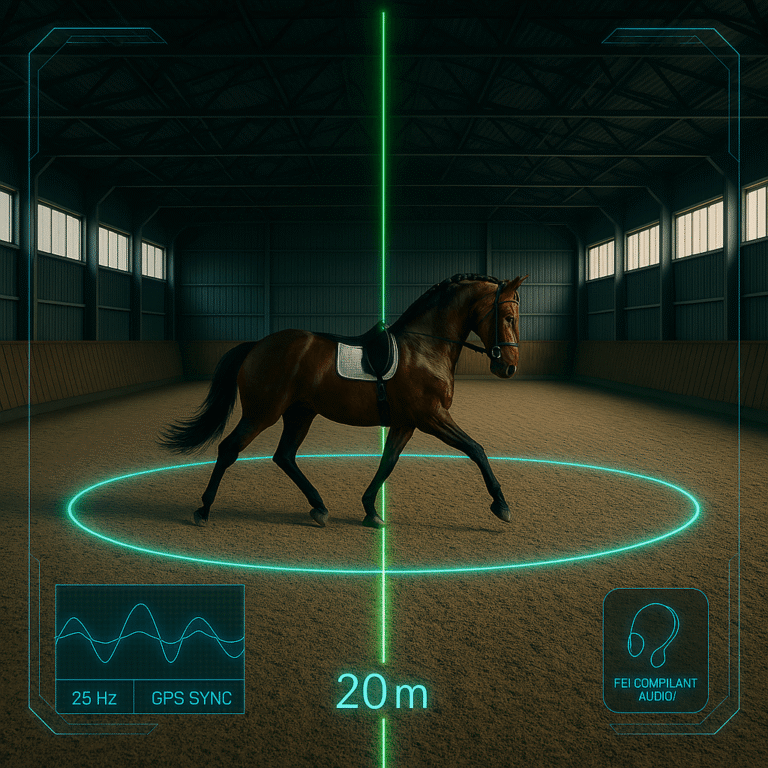
EquiTempo, our proprietary methodology, converts rhythm training from guesswork into measurable science. By leveraging IMUs, GPS tracking, and audio-coaching workflows, EquiTempo ensures that every stride is consistent, every cadence is measurable, and every session builds quantifiable improvement.
Traditional Training vs. EquiTempo Biometric Analysis
| Feature | Traditional Training | EquiTempo Biometric Analysis |
|---|---|---|
| Tempo Measurement | Rider intuition | IMUs & GPS sensors |
| Accuracy | Subjective, inconsistent | Objective, repeatable, precise |
| Feedback | Visual/verbal cues | Real-time audio, haptic, and graphical feedback |
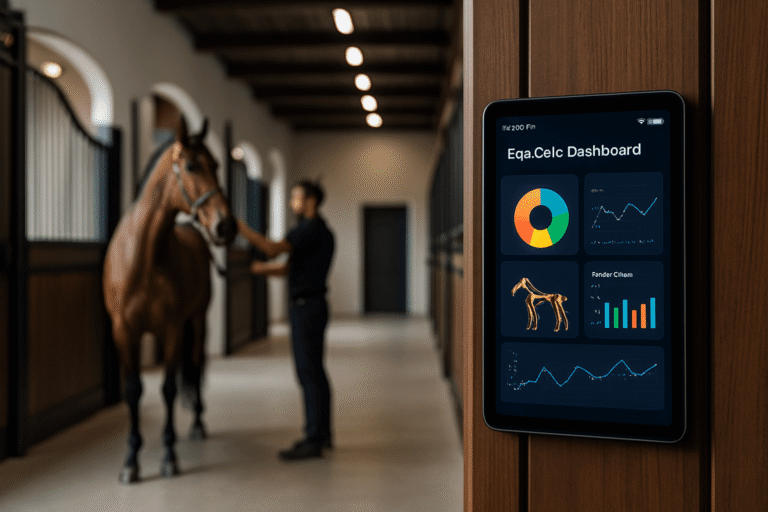
| Performance Tracking | Anecdotal | Historical metrics, analytics dashboards |
| Scalability | Rider skill-dependent | Multi-horse, multi-rider, data-driven |
| Adaptability | Limited | Instant correction via apps & sensors |
EquiTempo doesn’t replace traditional training—it amplifies human skill with data, ensuring that each correction is backed by measurable results.
The Physics of Tempo: Why Rhythm Is More Than A Feeling
Maintaining cadence is not just aesthetic—it’s biomechanical and neurological. Even slight tempo fluctuations affect:
- Balance: Uneven stride rhythm shifts the center of mass.
- Impulsion: Variability reduces energy efficiency.
- Performance Scores: In dressage, eventing, or jumping, inconsistent tempo lowers judges’ evaluation.
EquiTempo quantifies key metrics:
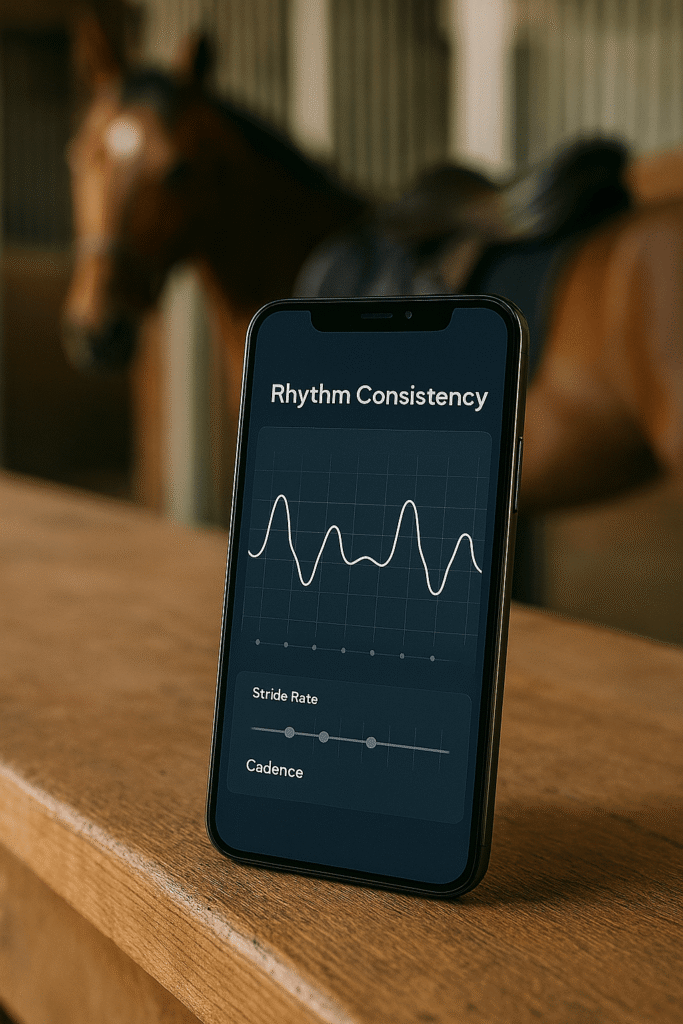
- Stride Rate (BPM) – beats per gait per minute
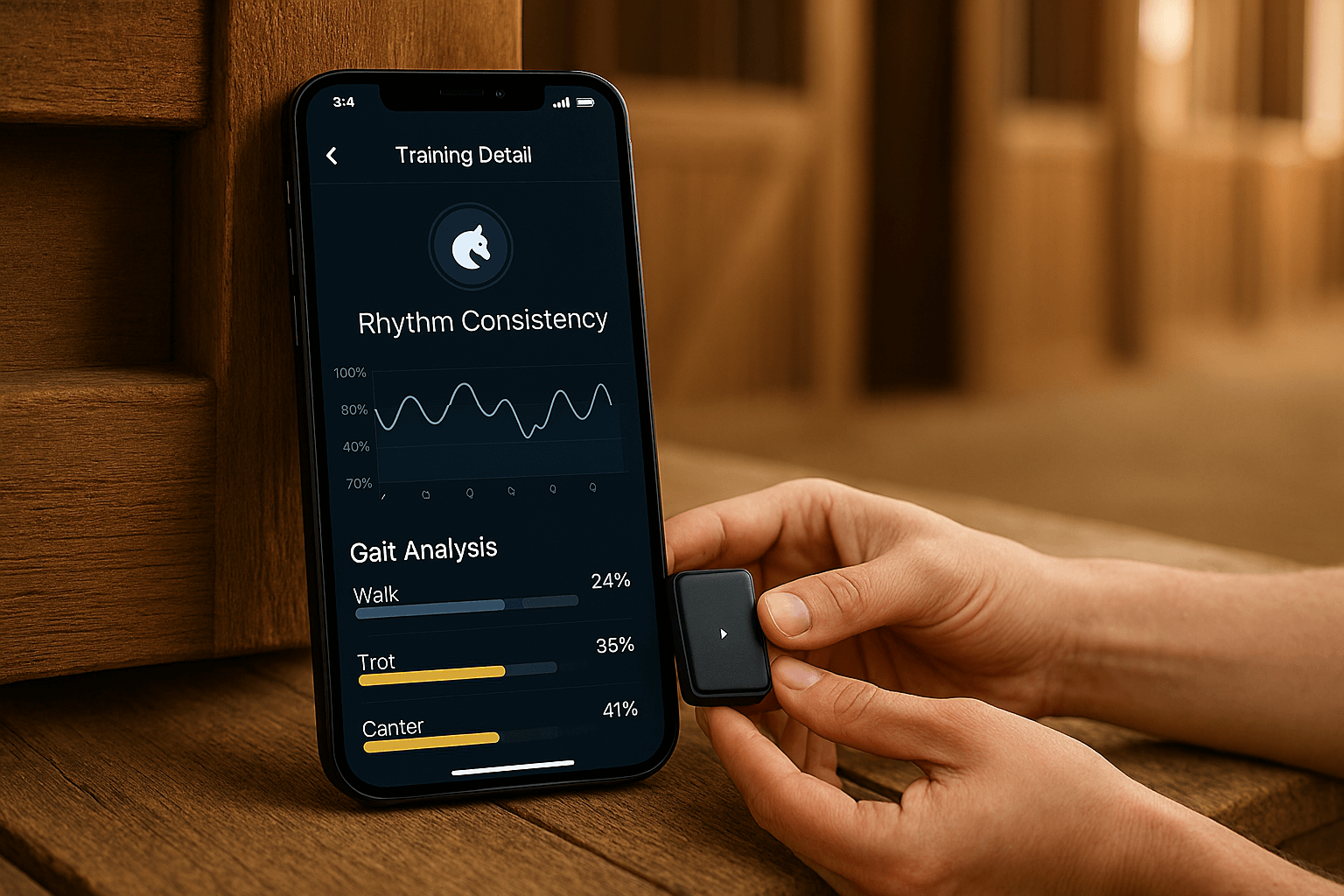
- Consistency Index – variance from target rhythm
- Energy Efficiency Metric – measures wasted motion due to tempo drift
Through repeated measurement, riders gain a scientific understanding of cadence, transforming training from guesswork to predictable results.
Sensor Integration: From Apple Watch Ultra to Garmin Equestrian Profiles
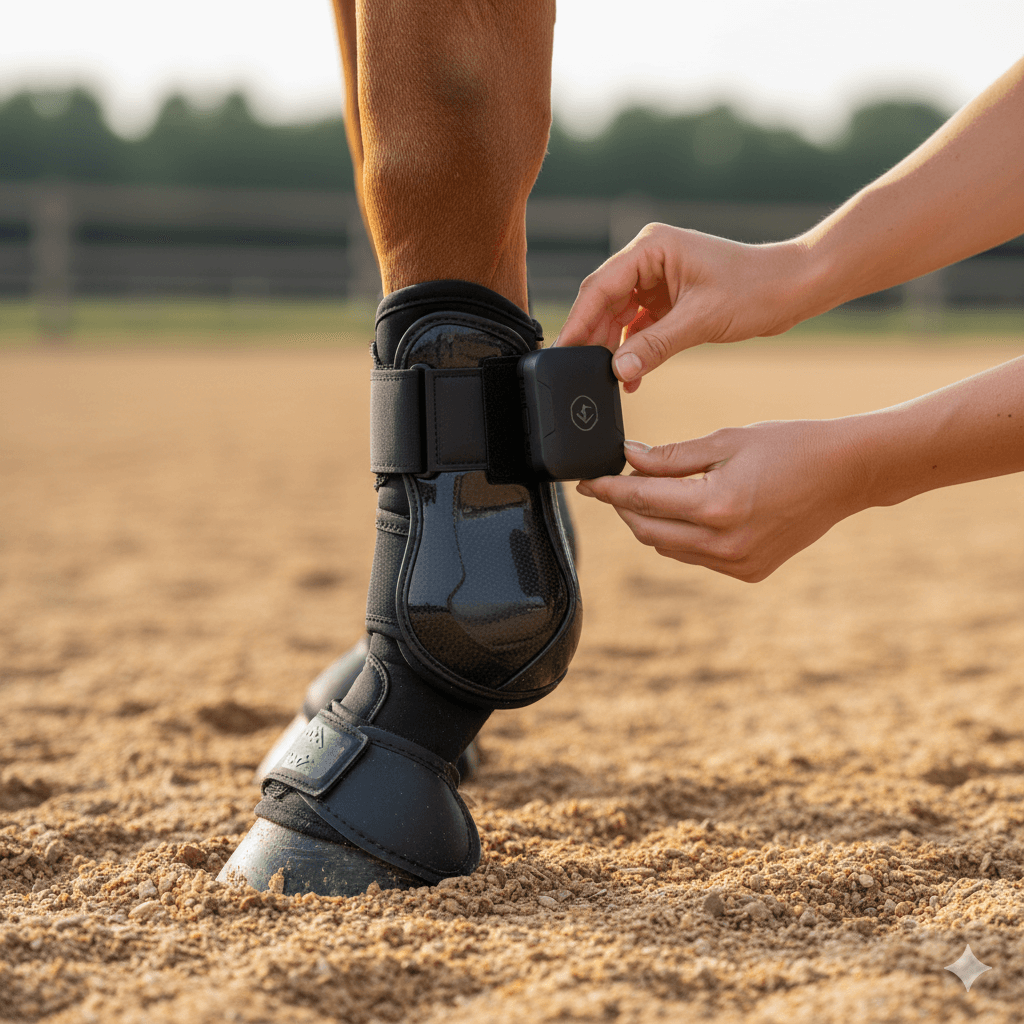
In 2026, sensors are not just optional—they’re standard. Riders can now monitor rhythm without looking at a phone:
- IMUs (Inertial Measurement Units): Track angular velocity and linear acceleration of every stride.
- GPS Modules: Measure speed, distance, and trajectory, linking spatial awareness to cadence.
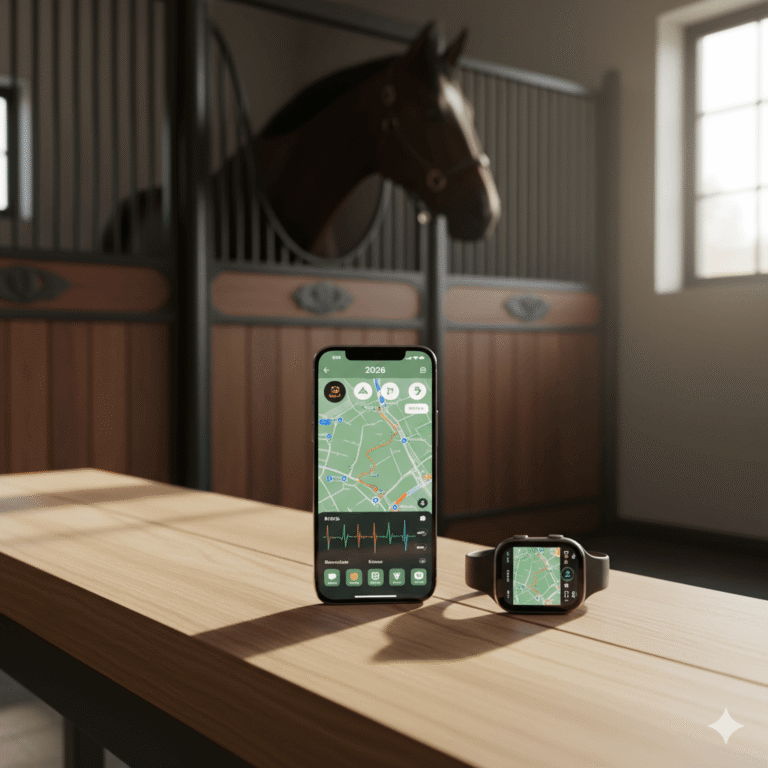
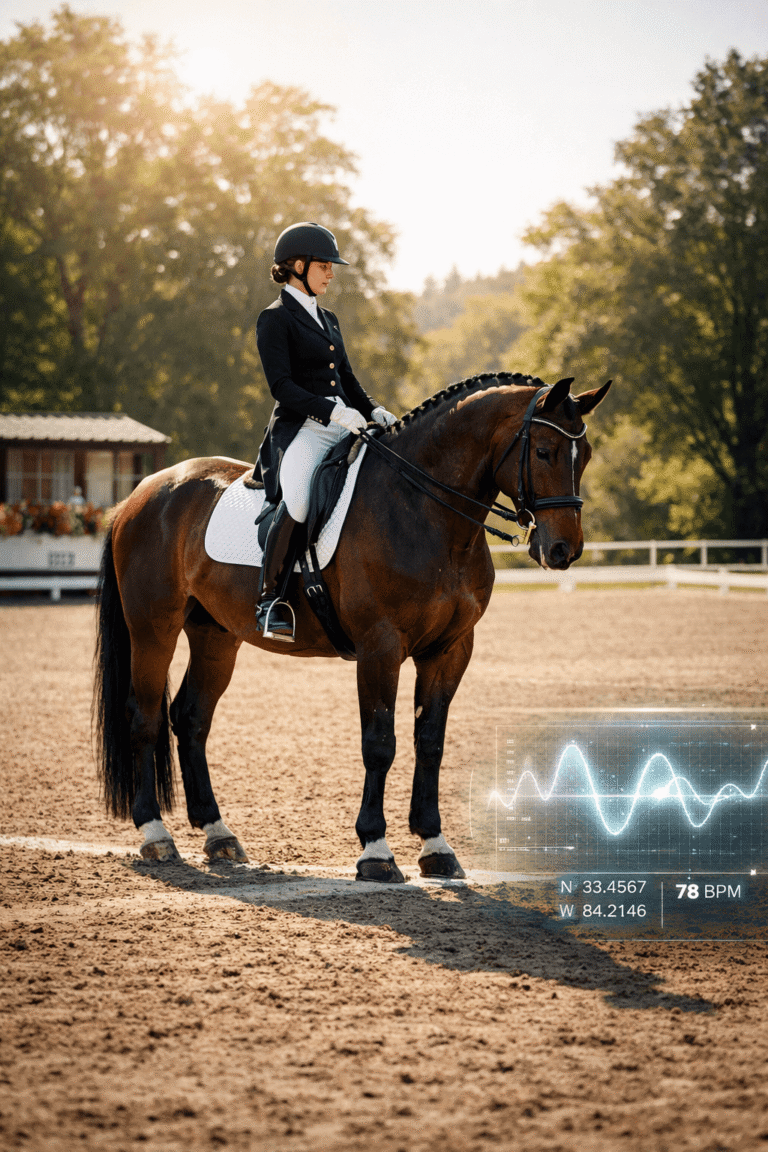
- Apple Watch Ultra: Offers dedicated equestrian metrics, including real-time BPM and stride visualization on the wrist.
- Garmin Equestrian Profiles: Provide haptic alerts and audio feedback without breaking focus, ideal for stadium or arena work.
- Bluetooth and Cloud Syncing: Data streams directly to apps like Equilab and Dressage Hero, providing immediate and historical insights.
See our Equilab vs. Ridely: Which Equestrian App is Actually Worth Your Money in 2026?
This integration allows riders to train continuously, hands-free, and eyes on the horse, a crucial advancement over traditional phone-based monitoring.
The Science of Audio Cues: Why the Brain Reacts Faster to Sound
EquiTempo leverages audio feedback as a neurological shortcut. Studies show that:
- Auditory signals reach the brain faster than visual cues, allowing immediate stride correction.
- Click-track metronomes stabilize the horse’s nervous system by providing predictable beat patterns.
- Binaural beats can enhance rider-horse synchronization, reducing overcorrection and tension.
In practice, audio cues are more effective than verbal instructions or visual timers, providing instantaneous feedback that the horse and rider can entrain to naturally.
Step-by-Step Training Protocol: From Baseline to Mastery
EquiTempo training is progressive, blending data and discipline over 30+ days.
Day 1: Establishing the Baseline
- Equip horse and rider with IMU sensors or Apple/Garmin wearables.
- Record a 15-minute session without interference to measure natural cadence.
- Analyze consistency index and BPM fluctuations, establishing target ranges.
Day 2–10: Introduction to Digital Metronome
- Activate audio or haptic feedback via apps.
- Train at one gait per session, correcting deviations using click-track cues.
- Review data post-ride to identify patterns (e.g., left vs. right lead discrepancies).
Day 11–20: Refining the Cadence
- Increase session complexity: transitions, lateral work, and small jumps.
- Track stride efficiency and adjust target BPM.
- Begin integrating historical session comparisons to ensure measurable progress.
Day 21–30: Mastering the Rhythm
- Focus on consistency under variable conditions (arena, outdoor, uneven footing).
- Use audio-metronome cues as subtle reinforcement rather than constant guidance.
- Review the 30-day trend: BPM variance should decrease below ±2–3 BPM consistently.
This structured approach ensures measurable improvement, replacing guesswork with reproducible skill.
The Discipline of Data: Honest Critique
As an equestrian tech expert, I must be clear: technology is a tool, not a shortcut. Consistent rhythm requires disciplined riding, not just wearable sensors. EquiTempo amplifies awareness but cannot substitute for rider skill.
- Riders must interpret data, identify their own flaws, and correct them consciously.
- Inconsistent hands, unbalanced seats, or over-reliance on audio cues will not improve cadence alone.
- Mastery comes from daily repetition, reflection, and incremental correction, supported—but not replaced—by technology.
EquiTempo is an accountability mirror. The horse will follow rhythm faithfully, but the rider must learn to ride in harmony with data, not just intuition.
Internal Linking & Resources
To complement EquiTempo, riders and trainers should explore:
- Our Independent Review of the 12 Best Apps to choose compatible training apps.
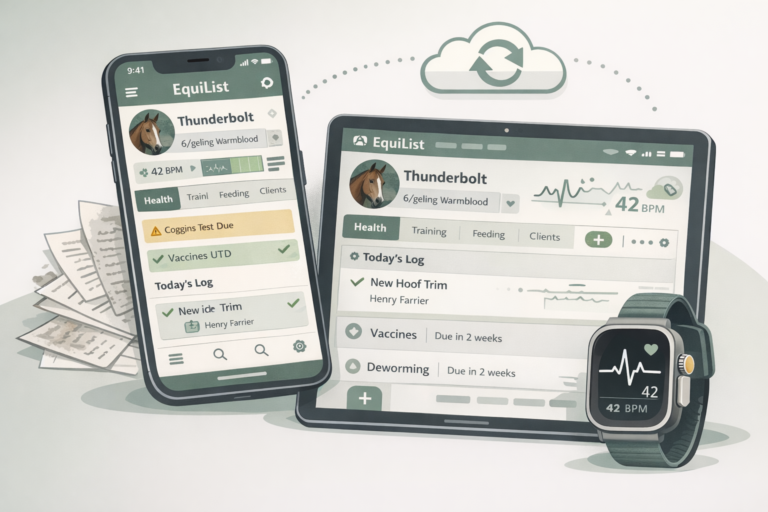
- The EquiList Framework for recording health, performance, and biometric data across horses.
These resources integrate seamlessly with EquiTempo, creating a holistic digital training ecosystem.
When Sensors Lie: The Importance of Calibration & Placement.
As an equestrian tech expert, I have to be blunt: data is only as good as the physics behind it. If your smartphone is bouncing loosely in a pocket or your IMU sensor is shifting on the horse’s boot, your rhythm metrics will be worthless noise. Master the ‘Digital Precision’ of EquiTempo by following these three non-negotiable rules:
Secure Mounting: Use professional-grade girth or boot mounts. A shifting sensor creates ‘ghost’ tempo spikes.
Environment Calibration: Always calibrate your sensors on level ground before starting your work.
The Human Check: If the app says your horse is at 100 BPM but your intuition screams otherwise, check your gear first. Technology is an accountability mirror—it shouldn’t be a blindfold.
Conclusion: Why Biometric Rhythm is the 2026 Standard
In 2026, elite performance demands more than “feel.” EquiTempo combines sensors, apps, and audio-feedback workflows to provide biometric precision, measurable improvement, and reproducible results.
By committing to a structured training protocol, disciplined interpretation of data, and progressive rhythm mastery, riders gain control over cadence, balance, and performance.
With EquiTempo, riders no longer guess at tempo—they own it.
Further Reading & Sources
Fédération Equestre Internationale (FEI) – Official guidelines on the Training Scale and performance standards for dressage, eventing, and show jumping.
Equine Biomechanics Research – Studies on stride cadence, balance, and energy efficiency in horses, including work on IMU-based motion tracking.
Neurological Studies on Auditory Entrainment and Metronomes – Research demonstrating how audio cues improve motor coordination, reaction time, and rhythm consistency in humans and animals.
Apple & Garmin Technical Documentation (2026) – Specifications for wearable sensors, equestrian profiles, and real-time BPM measurement in rider and horse applications.