Best Horse Riding Apps with Heart Rate Monitor Integration (2026)
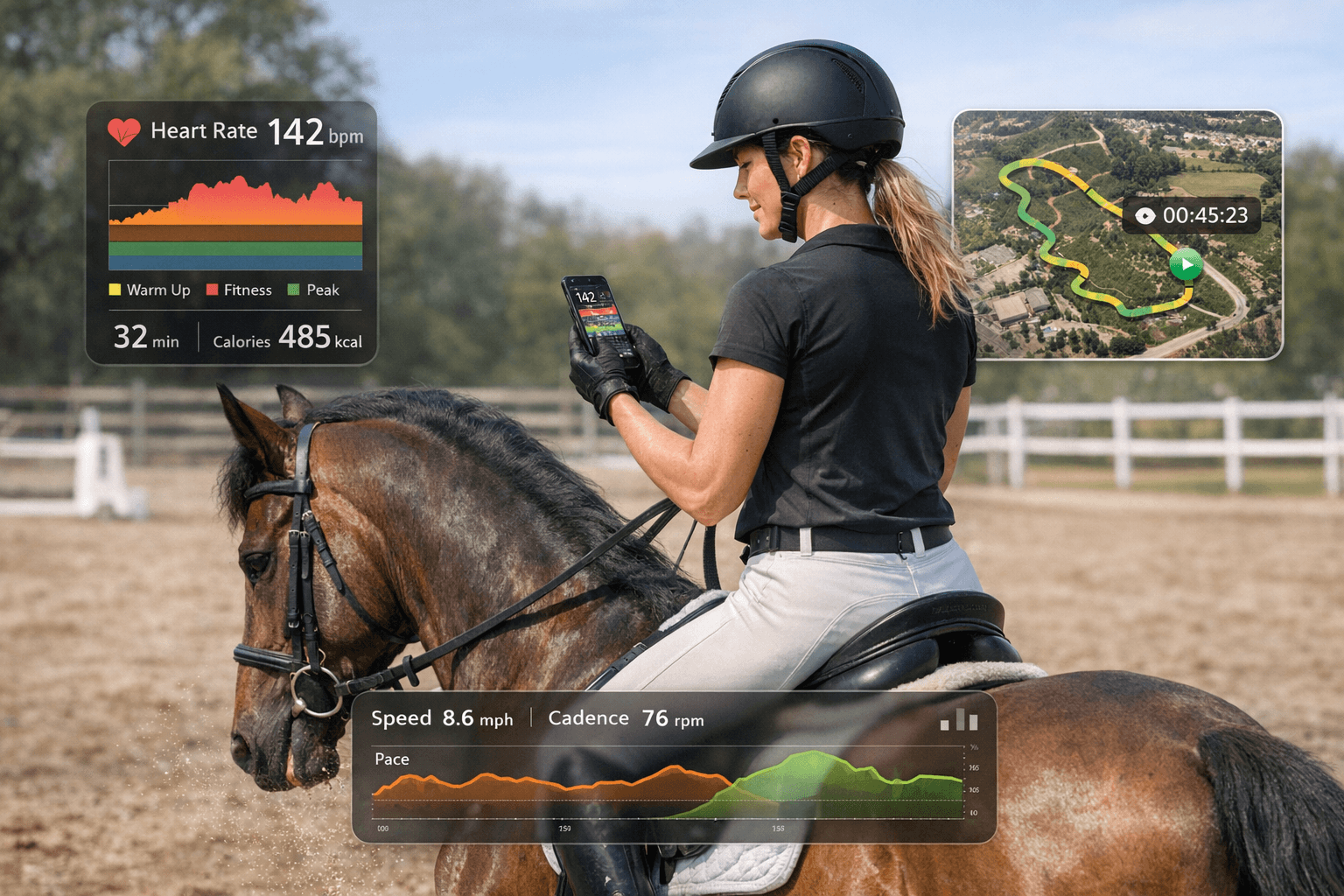
Horse riding is no longer limited to instinct and experience alone. Today, riders have access to advanced tools that bring measurable data into every session. Among these innovations, choosing the best horse riding app with heart rate monitor integration has become a key step for riders who want to train smarter, improve performance, and protect their horse’s health.
Modern equestrian apps now combine GPS tracking, gait analysis, and real-time heart rate monitoring into a single platform. This allows riders to move beyond guesswork and make informed decisions based on actual physiological data. Whether you’re training for endurance, refining dressage performance, or simply tracking fitness, these apps offer a clear advantage.
This guide is designed as a practical, decision-focused resource. It explains how these apps work, why heart rate tracking matters, and how to choose the right solution. It also includes a detailed comparison of the best horse riding app with heart rate monitor integration options available in 2026—helping you confidently select the right tool for your needs.
What Is a Horse Riding App with Heart Rate Integration?
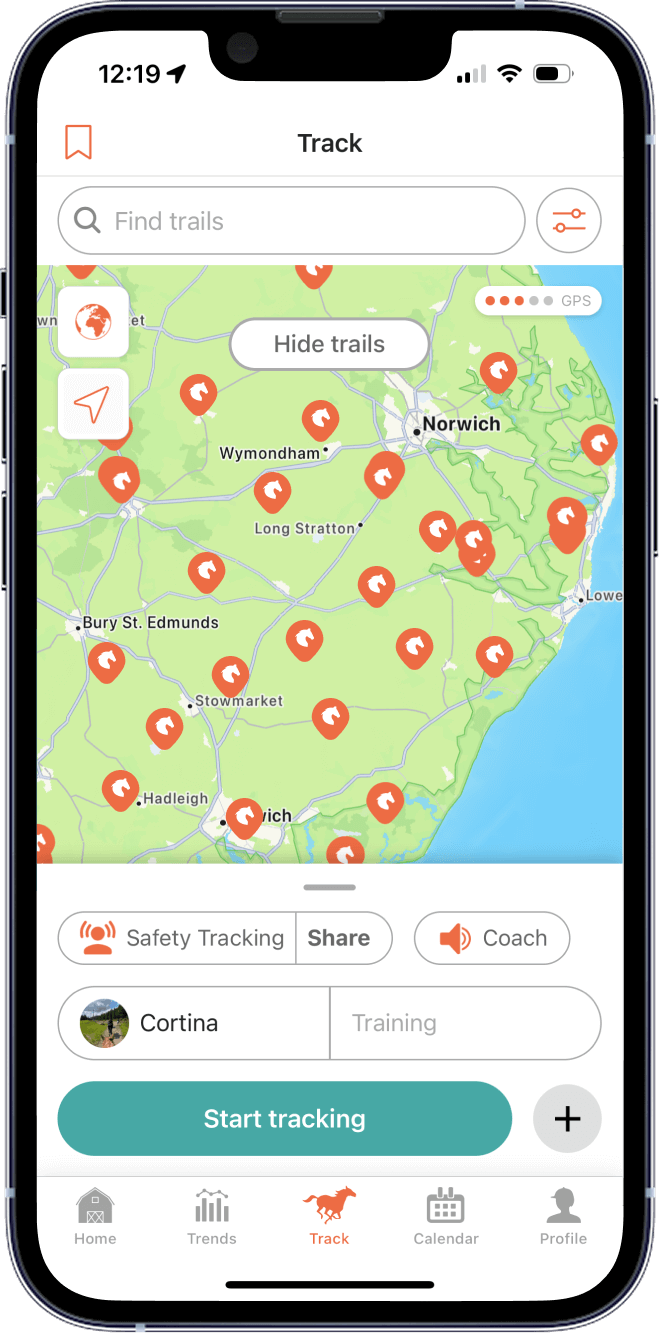
A horse riding app with heart rate monitor integration is a mobile or smartwatch application that connects with wearable sensors to track both ride metrics and physiological data. These apps are designed to provide insight into how a horse performs during exercise—not just externally, but internally.
At a basic level, most riding apps track speed, distance, duration, and route using GPS. However, when heart rate integration is added, the functionality becomes significantly more valuable. By pairing with an equine heart rate monitor (usually attached to the girth), the app can display real-time heart rate data throughout the ride.
This allows riders to understand how hard their horse is working during different gaits, terrain conditions, or training sessions. More advanced apps can also measure recovery time, which is a key indicator of cardiovascular fitness.
Some platforms extend functionality further by supporting dual tracking—monitoring both the rider’s and horse’s heart rate simultaneously. Others include features such as:
- Gait recognition (walk, trot, canter)
- Training logs and performance history
- Multi-horse profile management
- Integration with smartwatches and wearables
- Data export for trainers or veterinarians
Apps like Enduro FIT and Horseteq illustrate how this technology is evolving into a complete training ecosystem.
In practical terms, these apps act as a digital performance assistant. They provide objective data that complements rider intuition, making it easier to structure training sessions, monitor workload, and track long-term progress.
Why Heart Rate Monitoring Actually Matters

Heart rate monitoring is one of the most reliable ways to assess a horse’s physical condition during exercise. While speed and distance provide useful context, they do not reflect the internal workload placed on the horse. This is where the best horse riding app with heart rate monitor integration becomes essential.
A horse’s heart rate responds directly to effort, stress, and fatigue. By tracking it in real time, riders can identify whether the horse is working within an appropriate intensity range. For example, two horses may travel the same distance at the same speed, but their heart rates could differ significantly depending on fitness levels.
Training within specific heart rate zones is widely used in endurance riding and conditioning programs. It allows riders to:
- Build cardiovascular fitness safely
- Avoid overtraining and fatigue
- Monitor progress over time
- Detect early signs of stress or discomfort
Recovery rate is another critical metric. After exercise, a fit horse’s heart rate should return to normal relatively quickly. Slower recovery can indicate fatigue, dehydration, or underlying health issues.
Heart rate monitoring also supports injury prevention. Overexertion is a common cause of strain and long-term damage. By keeping workouts within controlled limits, riders can reduce unnecessary risk.
Additionally, tracking trends over weeks or months provides measurable proof of improvement. For instance, a lower heart rate during the same level of work typically indicates improved fitness.
In short, heart rate data transforms riding from subjective evaluation into evidence-based training. For riders focused on performance, safety, and long-term horse welfare, it is no longer optional—it is a critical tool.
Best Horse Riding Apps with Heart Rate Monitor Integration (2026)
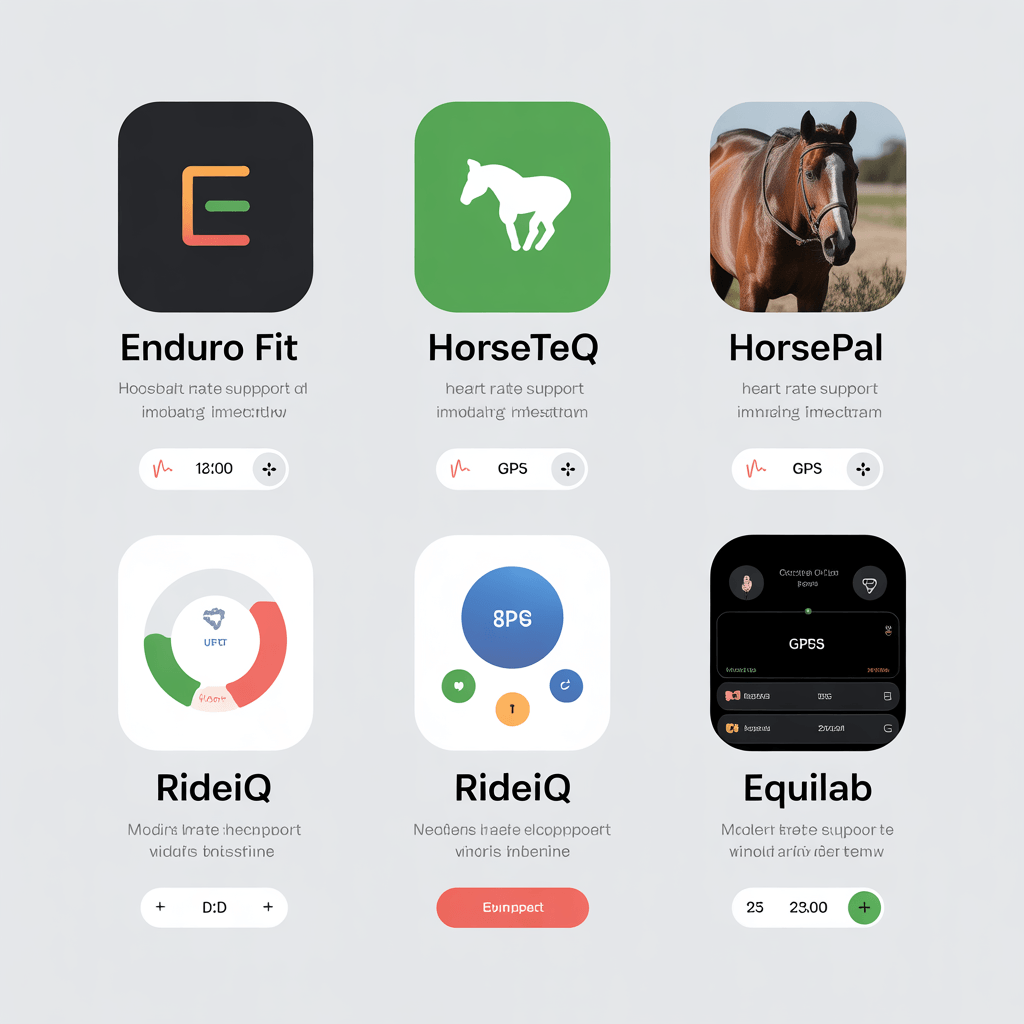
Not all equestrian apps deliver accurate heart rate tracking in real-world riding conditions. The apps below stand out for their sensor compatibility, data reliability, and proven performance in the field.
Each option serves a different type of rider, so the right choice depends on your training goals and setup.
1. Enduro FIT
Overview:
A performance-focused app designed for riders who want detailed analytics, including real-time heart rate tracking and training insights.
Key Features:
- Real-time horse (and rider) heart rate monitoring
- GPS ride tracking and mapping
- Gait detection and performance analytics
- Post-ride reports and fitness trends
Best For:
Endurance riders and data-driven users who want detailed physiological insights.
2. Horseteq
Overview:
A versatile equestrian tracking system that combines ride data with sensor-based analytics.
Key Features:
- Motion and gait analysis
- GPS tracking and ride logs
- Multi-horse management
- Sensor integration for performance tracking
Best For:
Riders managing multiple horses or those focused on movement analysis.
3. Horsepal
Overview:
A broader horse management platform that includes training, health tracking, and performance monitoring features.
Key Features:
- Horse care and training logs
- Integrated health tracking
- Stable management tools
- Optional performance monitoring integrations
Best For:
Owners and trainers looking for an all-in-one management solution.
4. RideIQ
Overview:
Primarily a training and coaching app, with structured lessons and performance tracking features.
Key Features:
- Guided riding lessons
- Audio coaching
- Ride tracking and performance feedback
- Integration with wearable devices
Best For:
Riders focused on improving skills and structured training.
5. Equilab
Overview:
One of the most widely used riding apps, offering comprehensive tracking and community features.
Key Features:
- GPS ride tracking
- Gait detection
- Training statistics and history
- Community sharing features
Best For:
General riders looking for an easy-to-use tracking app (limited heart rate support depending on setup).
Comparison Table
| App | Heart Rate Support | GPS Tracking | Best For | Platform | Ease of Use |
|---|---|---|---|---|---|
| Enduro FIT | Yes (advanced) | Yes | Performance & endurance training | iOS / Android | Moderate – needs setup |
| Horseteq | Yes (sensor-based) | Yes | Multi-horse & analytics | iOS / Android | Moderate – some training required |
| Horsepal | Limited / integration | Yes | Horse management | Web / Mobile | Easy – beginner-friendly |
| RideIQ | Limited (wearables) | Yes | Coaching & skill improvement | iOS / Android | Easy – guided lessons |
| Equilab | Partial (device-dependent) | Yes | General ride tracking | iOS / Android | Very easy – intuitive interface |
What to Look for (Features)
Selecting the best horse riding app with heart rate monitor integration requires understanding which features actually impact your riding experience.
First, reliable heart rate integration is essential. The app should connect seamlessly with equine heart rate monitors and provide accurate real-time data. Without this, the primary benefit is lost.
GPS tracking is another core feature. It enables route mapping, distance measurement, and speed tracking, which are important for evaluating overall workload.
Gait detection adds another layer of insight. By identifying walk, trot, and canter automatically, the app helps break down training sessions and correlate effort with heart rate data.
Data analysis tools are equally important. Look for apps that provide:
- Heart rate zones
- Recovery time metrics
- Session summaries
- Long-term performance trends
Usability should not be overlooked. A complex interface can reduce the likelihood of consistent use. The best apps balance advanced features with a clean, intuitive design.
Compatibility with wearables—such as smartwatches—can also improve convenience and safety during rides.
Finally, consider scalability. If you plan to track multiple horses or share data with trainers, choose an app that supports these functions.
How to Choose the Right App for Your Riding Goals
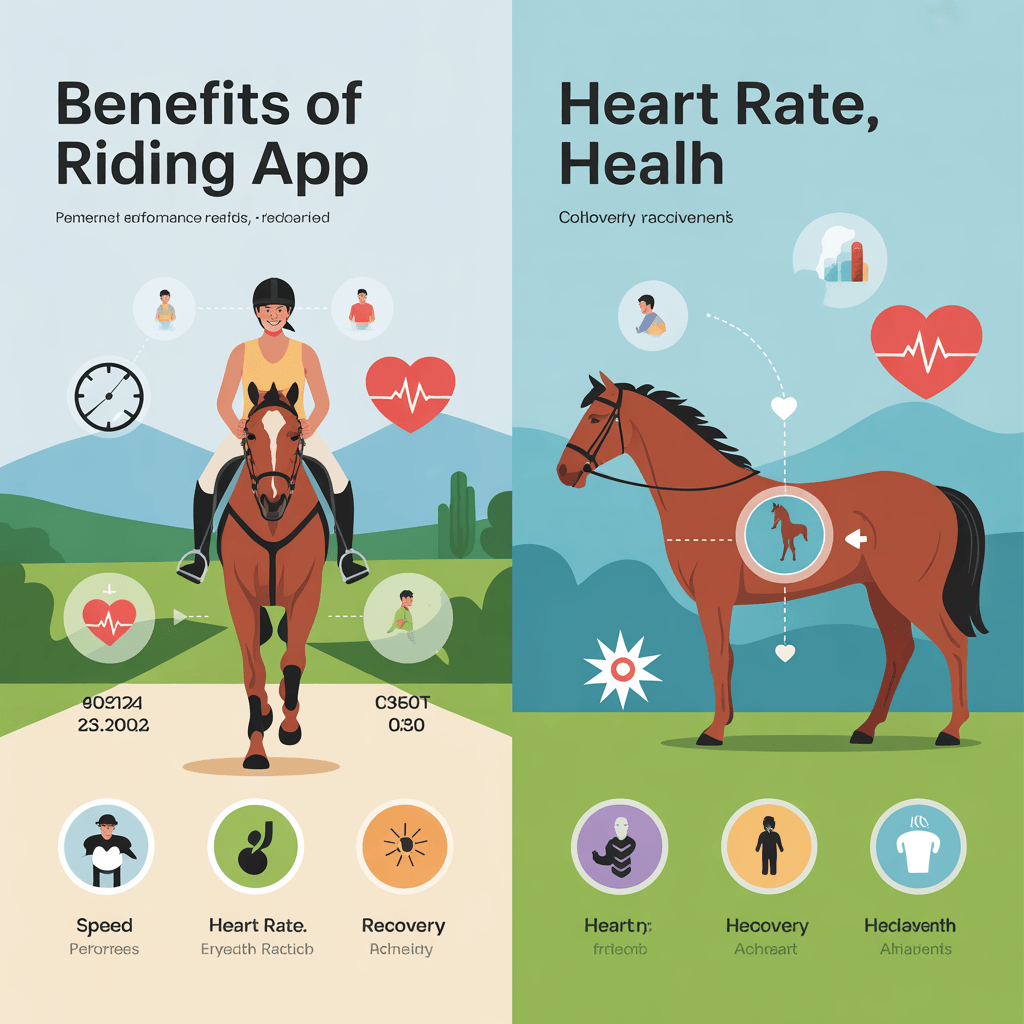
Choosing the best horse riding app with heart rate monitor integration depends on how you ride and what you want to improve.
If your focus is performance and conditioning, prioritize apps with advanced heart rate analytics and recovery tracking. These tools provide the most actionable insights for structured training.
For riders managing several horses, multi-profile support and comparative analytics become more important. In this case, platforms with strong data organization features are a better fit.
If your goal is learning and skill development, consider apps that combine coaching with tracking. While heart rate data may be more limited, structured guidance can still add value.
Budget and hardware compatibility also play a role. Some apps require specific sensors or subscriptions, so it is important to ensure everything works together before committing.
A practical approach is to start with one app, test it consistently for a few weeks, and evaluate whether the data helps you make better training decisions.
How to Get Started
Getting started with the best horse riding app with heart rate monitor integration involves a few straightforward steps.
First, choose an app that aligns with your goals. Download it from a trusted app store and explore its features.
Next, invest in a compatible heart rate monitor designed for horses. These devices typically attach to the girth and connect via Bluetooth.
Once paired, set up your horse’s profile within the app. Accurate information improves data quality and insights.
Begin with short, controlled sessions to understand how the app works. Pay attention to heart rate trends rather than focusing on a single ride.
Consistency is key. Over time, the data becomes more meaningful, allowing you to identify patterns and adjust training accordingly.
Final Verdict
The best horse riding app with heart rate monitor integration is not a single universal solution—it depends on your goals, experience level, and training style. However, there are several strong options available that provide reliable tracking and meaningful insights.
Apps like Enduro FIT and Horseteq stand out for performance-focused riders, while platforms like Horsepal and RideIQ offer broader functionality. Equilab remains a solid entry point for general tracking.
What matters most is not the app itself, but how you use the data it provides. Consistent tracking, combined with informed decision-making, leads to better results over time.
The difference between guessing and knowing comes down to data.
Start with one app, track your next ride, and use real metrics to improve performance and protect your horse’s health.
If you are serious about improving your riding, now is the time to adopt a data-driven approach.
Choose a best horse riding app with heart rate monitor integration that fits your needs, pair it with a reliable heart rate monitor, and begin tracking your sessions consistently.
Focus on understanding your horse’s response to training, not just completing rides. Use heart rate data to adjust intensity, improve recovery, and build long-term fitness safely.
Small insights lead to meaningful improvements. Start tracking, stay consistent, and use the data to ride smarter—not harder.