Syncing Apple Watch with Horse Apps: How Riders Track Motion, GPS, and Training
Syncing Apple Watch with horse apps has become one of the most powerful ways riders track training, motion data, and trail performance in 2026.
The 2026 equestrian wearable stack is no longer experimental. With watchOS 12 sensor refinements, high-frequency motion sampling, dual-band GNSS precision, and a maturing ecosystem of biomechanical riding apps, the Apple Watch Ultra 3 has become a legitimate field instrument for riders—not just a fitness tracker.
This guide consolidates the Core Motion architecture updates, Apple sensor white paper data, and real-world equestrian app implementations into one technical reference.
Why Apple Watch Ultra 3 Works Best for Syncing with Horse Apps
3000-Nit LTPO3 Display (Trail Visibility)
The Ultra 3’s next-generation LTPO3 panel peaks at 3000 nits brightness, delivering:
- Direct sunlight readability in open arenas and alpine terrain
- Reduced motion blur during high-speed riding
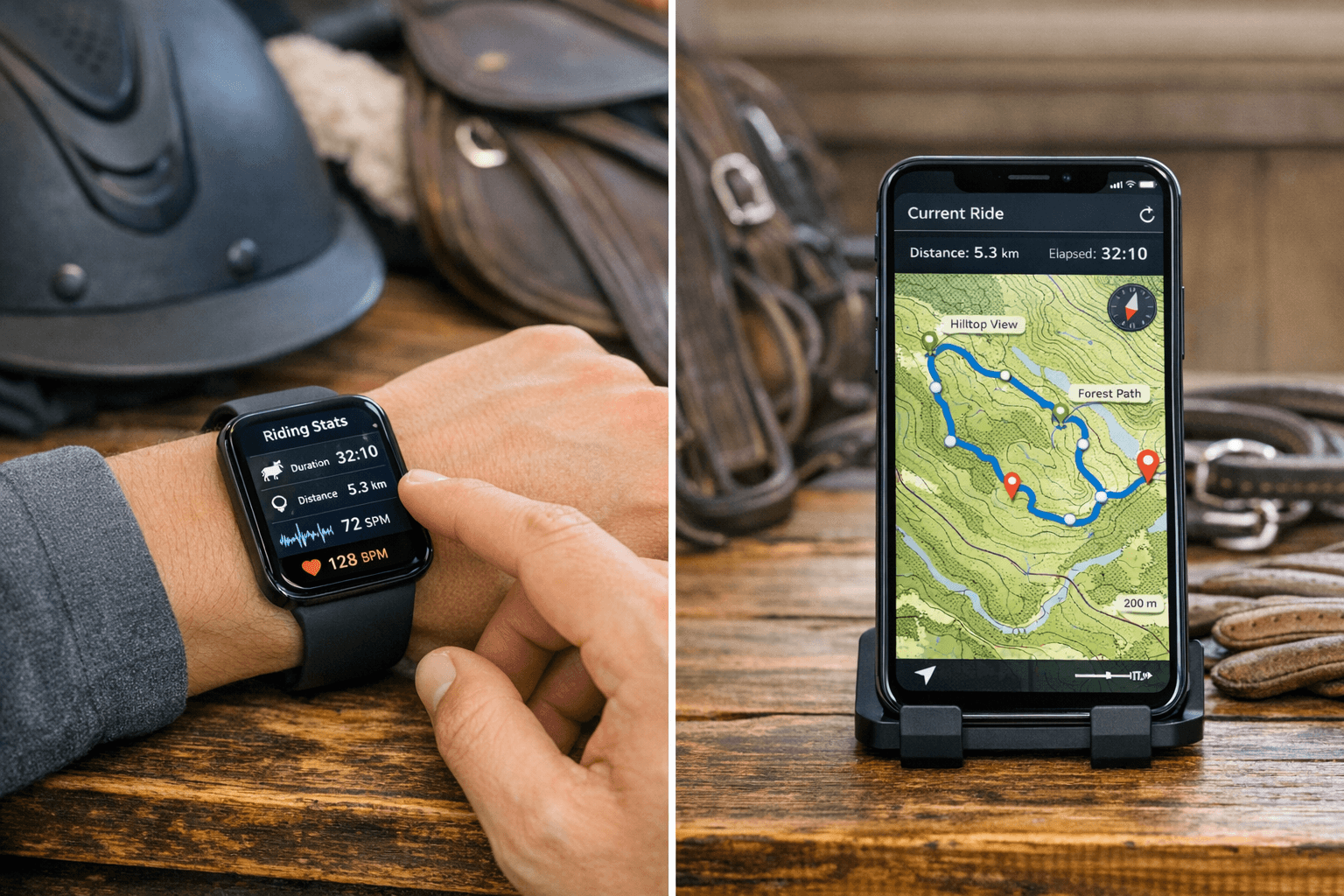
- Improved always-on clarity for glanceable metrics (pace, heart rate, elevation)
For riders working in reflective environments, this isn’t a luxury—it’s a functional requirement for safe navigation.
Dual-Frequency GNSS (L1 + L5)
Ultra 3 uses dual-band GNSS (L1 + L5) for improved signal fidelity.
Practical equestrian impact:
- Reduced multi-path error in wooded trails
- Tighter switchback tracking
- More stable velocity calculations during canter/gallop transitions
- Improved altitude consistency when paired with barometric correction
In backcountry terrain, dual-frequency significantly reduces GPS drift compared to single-band wearables.
How Apple Watch Sensors Sync with Horse Riding Apps
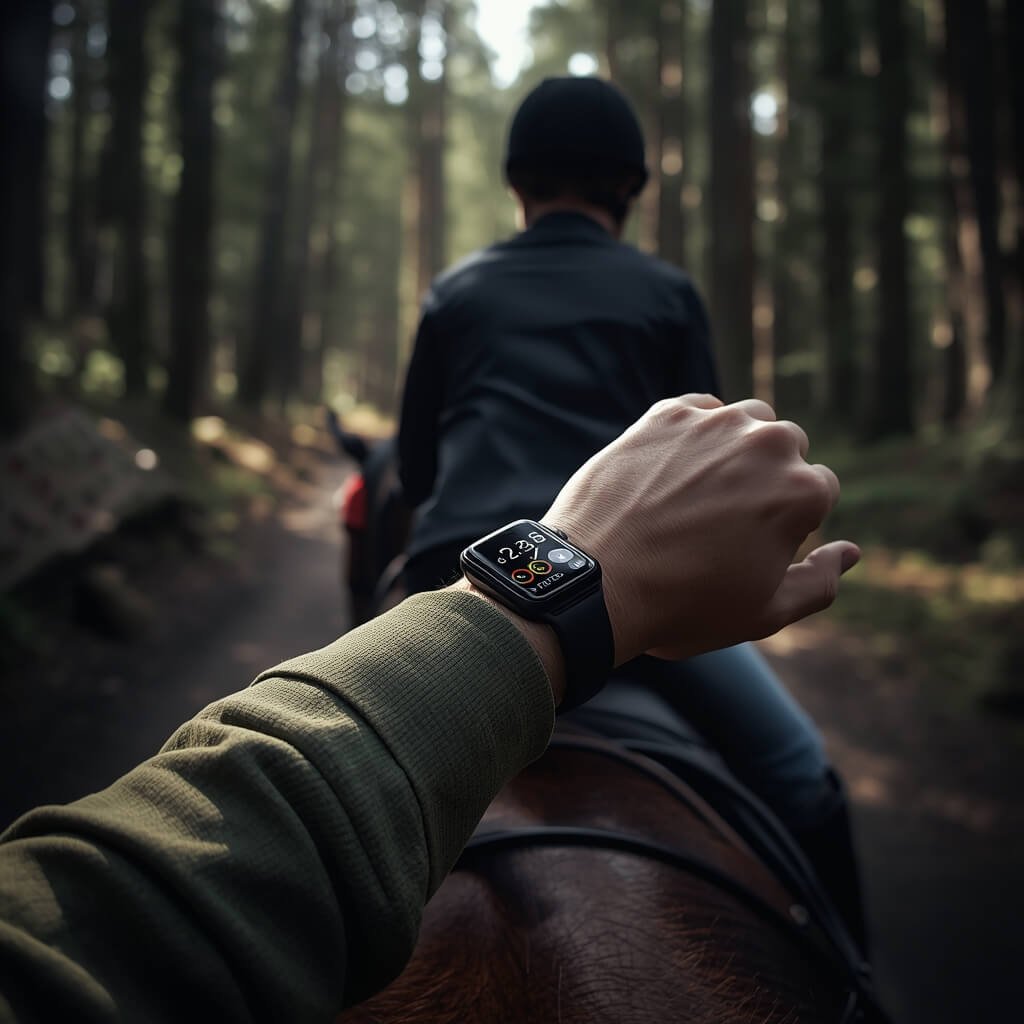
The wearable advantage in 2026 is not raw GPS—it’s sensor fusion.
Through Core Motion, watchOS 12 refines how motion data is delivered:
Device Motion Outputs (Processed, Bias-Corrected)
Using CMMotionManager, developers access:
- 3D Attitude (roll, pitch, yaw)
- Gravity vector separation
- User acceleration (gravity removed)
- Rotation rate (gyro-derived)
- Magnetic field vector
- Timestamped high-frequency updates (up to ~100 Hz hardware dependent)
This matters because:
- Posting symmetry analysis requires gravity-filtered acceleration.
- Stride rhythm detection depends on consistent rotation rate sampling.
- Saddle impact events require high-frequency data to avoid aliasing.
How Horse Apps Use Apple Watch Motion Data
With watchOS 12 improvements to motion batching and timestamp precision:
- 50–60 Hz sampling supports stride detection.
- Up to 100 Hz hardware ceiling enables impact detection modeling.
- Processed acceleration removes gravitational contamination.
For equestrian biomechanics, this allows:
- Posting rhythm deviation alerts
- Two-beat vs three-beat stride discrimination
- Rider torso stability scoring
- Asymmetrical rotational torque detection
Raw accelerometer data alone is insufficient—processed CMDeviceMotion data is required to isolate rider-induced motion from gravity and terrain oscillation.
Using Apple Watch Altitude Data in Horse Riding Apps
Equestrian trail performance is elevation-sensitive.
Using:
CMAltimeter- Barometric pressure sampling
- Absolute altitude change tracking
Apps can deliver:
- Real-time climb/descent rate
- Elevation fatigue indicators
- Hill repeat interval segmentation
- Vertical gain overlays for conditioning sessions
Barometric altitude outperforms GNSS-only vertical measurement in dense terrain.
Best Horse Apps That Sync with Apple Watch
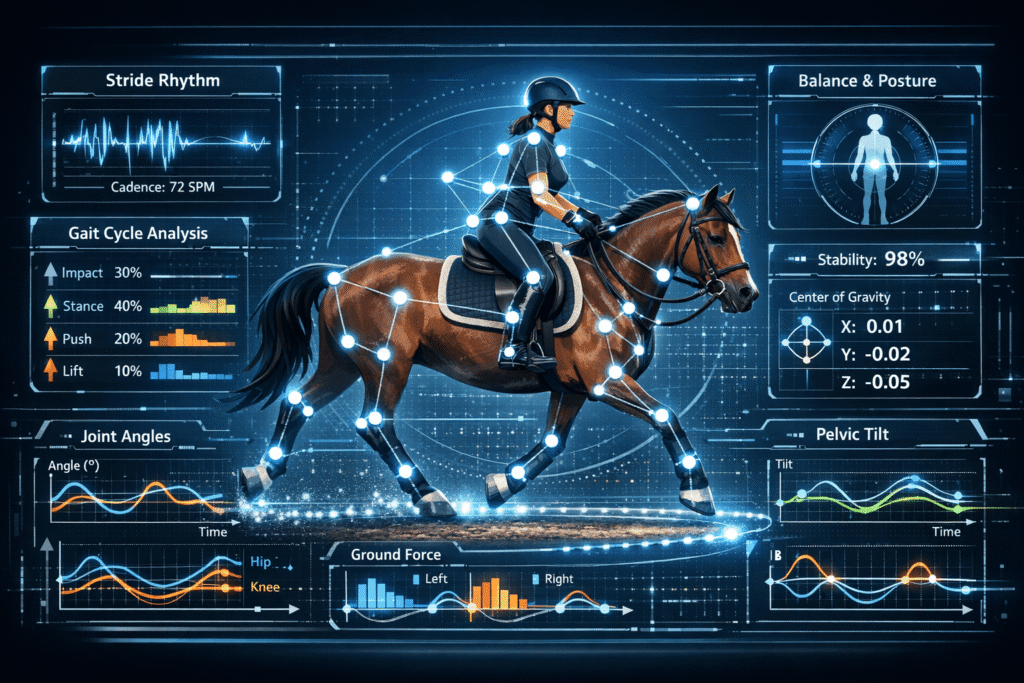
Two apps dominate serious rider analytics:
Equilab
Core Motion Usage:
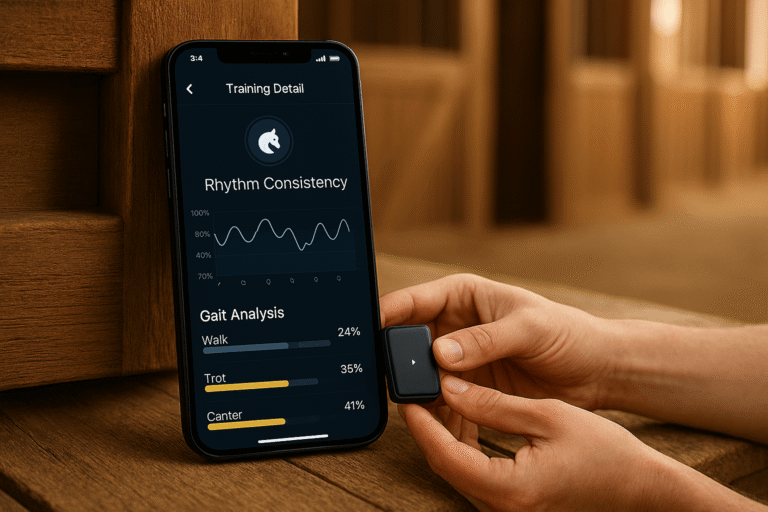
- Stride rhythm detection via rotation rate
- Rider stability scoring using processed acceleration
- Elevation-aware ride segmentation
- Asymmetry alerts during posting
Technical Strength:
Strong use of motion fusion + cadence modeling.
Ridely
Core Motion + CMAltimeter Integration:
- Gait transition timing
- Terrain-adjusted conditioning logs
- Jump impact estimation via peak acceleration
- Heart rate overlay for interval training
Technical Strength:
Coaching feedback integrated with motion sensor data.
For a broader breakdown of the ecosystem, see our in-depth guide to the 12 Best Apps for Horse Owners in 2026 (long-form app stack comparison).
Apple Watch Safety Features for Riders
Backcountry riders operate outside reliable LTE coverage.
Ultra 3 integrates:
- Satellite messaging capability
- Emergency SOS routing
- Location broadcast fallback
This creates a secondary safety layer independent of cellular service.
Best practice:
- Enable location sharing pre-ride.
- Pair with iPhone satellite relay where available.
- Maintain battery margin above 30% in remote terrain.
Satellite is not a performance feature—it’s risk mitigation infrastructure.
The 2026 Compatibility Matrix
| Feature | Ultra 3 Hardware | watchOS 12 API | Equilab | Ridely |
|---|---|---|---|---|
| Dual GNSS (L1 + L5) | ✔ | Auto-exposed | ✔ | ✔ |
| CMDeviceMotion | ✔ | CMMotionManager | ✔ | ✔ |
| High-Frequency Updates | ~100 Hz max | Configurable interval | ✔ | ✔ |
| CMAltimeter | ✔ | CMAltimeter | Partial | ✔ |
| Pedometer Events | ✔ | CMPedometer | Limited | Limited |
| Satellite SOS | ✔ | System-level | N/A | N/A |
Motion API Configuration: Developer Notes
Recommended Device Motion Setup:
- Reference frame:
.xArbitraryZVerticalfor rider-relative analysis - Update interval:
1.0 / 60.0minimum - Stop updates when idle to preserve battery
Best Practices:
- Always verify
isDeviceMotionAvailable - Declare
NSMotionUsageDescription - Use processed motion values—not raw accelerometer feeds
Battery drain increases significantly when gyro + altimeter + GNSS operate simultaneously.
Offline Redundancy & Mapping Strategy
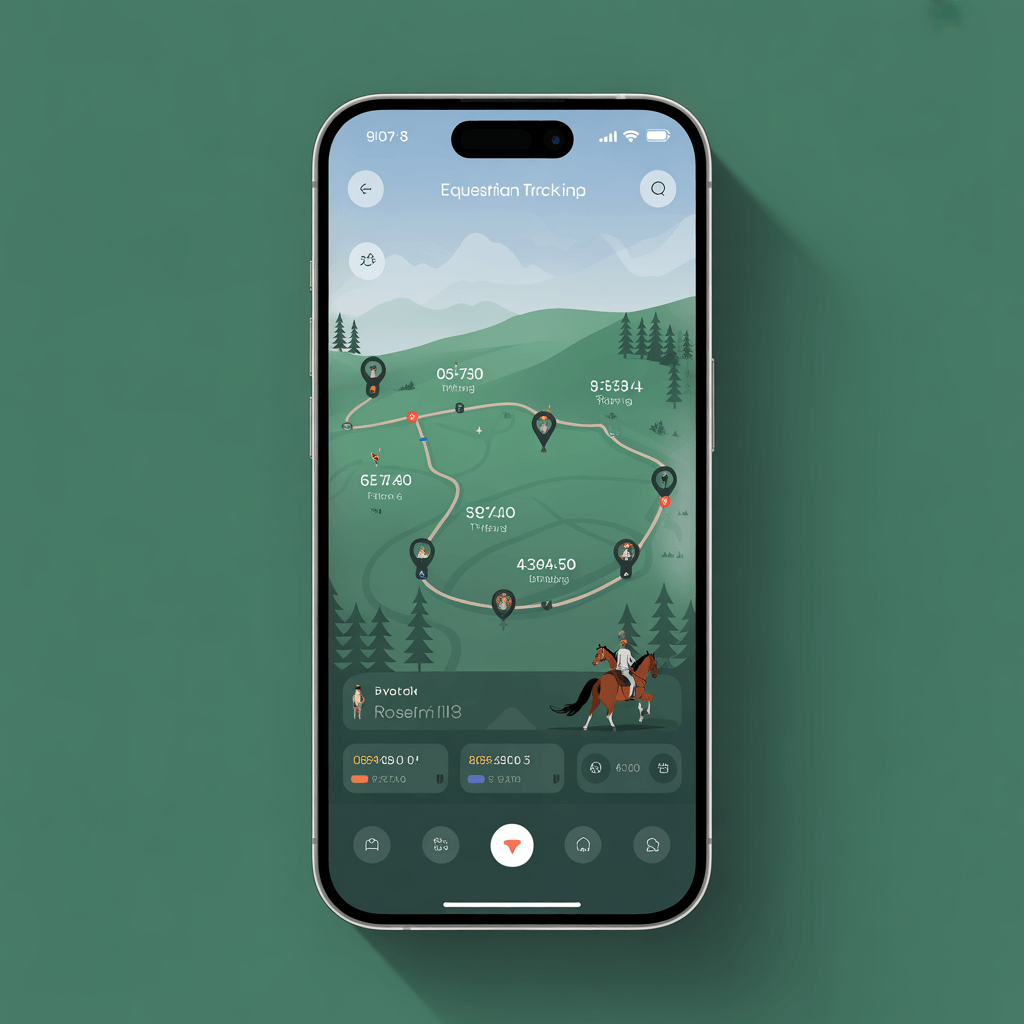
Ultra 3 excels at:
- Real-time biomechanics
- Quick-glance ride metrics
- Safety failover
However, it is not ideal for:
- Large-scale topo map rendering
- Multi-hour GPX export processing
- Deep route editing
Serious riders should pair it with a phone-based system or a dedicated offline GPS solution. For deeper hardware redundancy strategies, see our guide to Offline GPS Trackers for Horse Riders.
Why Syncing Apple Watch with Horse Apps Works Best with a Phone
The optimal 2026 equestrian setup is hybrid:
Use the Watch For:
- High-frequency biomechanical analysis
- Real-time gait and posture alerts
- Altitude tracking
- Satellite emergency access
Preserve the Smartphone For:
- High-resolution topographic mapping
- GPX logging and exports
- Offline redundancy
- Emergency communication backup
This layered approach maximizes:
- Precision
- Safety
- Battery longevity
- Data integrity
Final Technical Verdict
In 2026, the Apple Watch Ultra 3 is no longer an accessory for riders—it is a legitimate motion-analysis instrument when paired with mature equestrian software.
The differentiator is not the display or GPS alone.
It’s the fusion of:
- Dual-frequency GNSS
- 3000-nit visibility
- High-frequency Core Motion sampling
- Barometric altitude correction
- Satellite-level safety redundancy
When deployed correctly under a hybrid strategy, it delivers measurable biomechanical insight while preserving mapping and emergency depth on the smartphone layer.