USEF EquiTests 2026: Technical Biomechanics & Compliance Manual

The 2026 Harmony Mark emphasizes the interaction between horse and rider at a neuro-kinematic level. Judges are trained to detect micro-resistances that originate from subtle cerebral tension in the horse:
- Jaw & Poll Manifestations: Increased muscle tone in the temporomandibular region or slight elevation of the poll indicates stress or conflict. These micro-movements can manifest as brief jaw clenching, uneven flexion, or head tilts.
- Detection Protocols: Judges observe the horse’s response to rider aids during transitions, circles, and lateral work. A delayed response or subtle evasion is flagged as a reduction in Harmony.
- Biomechanical Implications: Micro-resistances compromise spinal alignment, lateral suppleness, and hindquarter engagement. Persistent tension leads to asymmetrical gait patterns, reducing the effectiveness of the rider’s aids.
- Scoring Impact: Under 2026 rules, even transient micro-resistances result in a measurable deduction within the Harmony mark. Judges are trained to quantify severity based on duration, recurrence, and impact on movement execution.
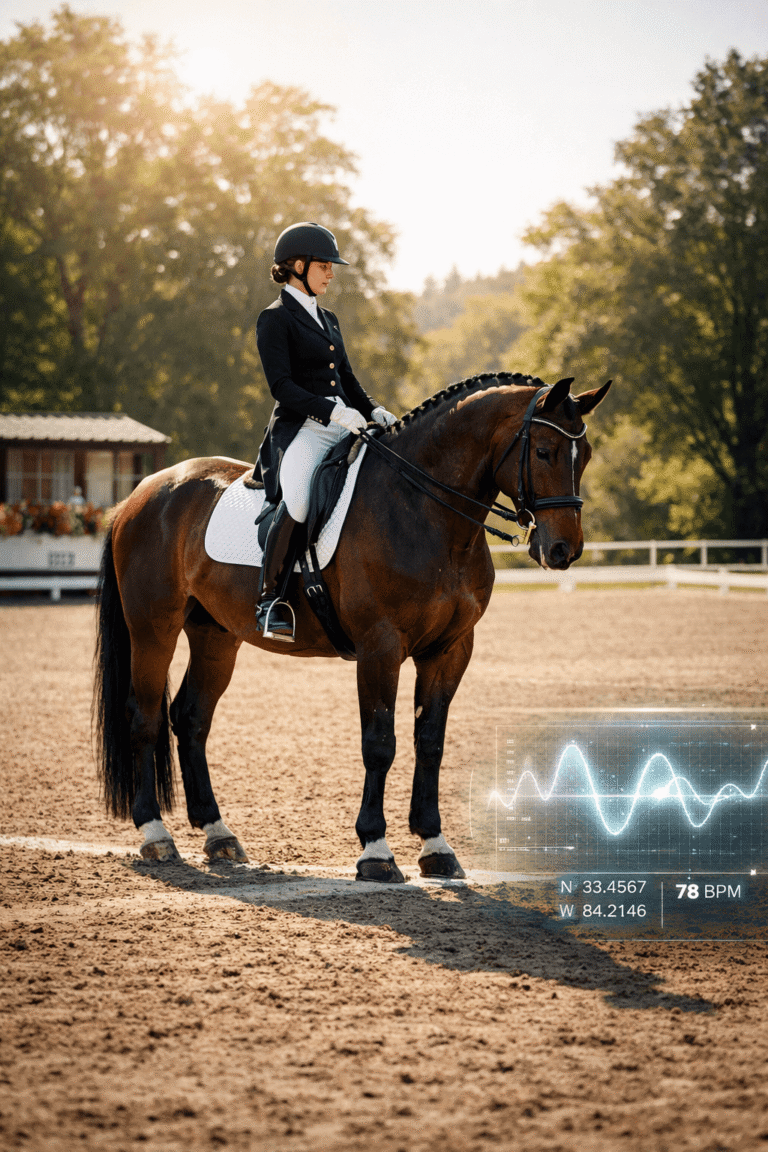
- Objective Corroboration: Kinematic verification is achieved via a Poll-mounted IMU (Inertial Measurement Unit) sensor synchronized with a bit-pressure transducer. These sensors, as detailed in the EquiTests 2026: Precision Pattern Mastery via Kinematic Spatial Mapping, detect head-poll deviations exceeding 2–3 degrees from the vertical longitudinal axis. This data provides an empirical audit of the horse’s neuro-kinematic state, validating the judge’s visual assessment of the Harmony mark by highlighting micro-resistances often invisible to the naked eye during high-velocity movements.
This approach integrates neurophysiological awareness with biomechanical observation, ensuring the Harmony mark reflects both responsiveness and mental cooperation.
The Equitation 1-19 Criticality Index
| Test | Technical Compliance Requirement |
|---|---|
| Test 1 | Maintain correct rider posture and seat stability at walk and trot transitions. |
| Test 2 | Execute halts and rein-backs with balance and straightness. |
| Test 3 | Demonstrate consistent rhythm and contact on 20m circles. |
| Test 4 | Perform leg-yields with precise lateral alignment and effective aids. |
| Test 5 | Show smooth changes of direction at trot with minimal loss of rhythm. |
| Test 6 | Maintain a secure, balanced rising trot on diagonal lines. |
| Test 7 | Demonstrate collected trot on figure-eight patterns with uniform bend. |
| Test 8 | Execute 10m canter circles maintaining lead and rhythm. |
| Test 9 | Hand Gallop — demonstrate control, balanced transition, and responsiveness to aids. |
| Test 10 | Lead Changes — execute accurate leads with minimal disruption to rhythm and balance. |
| Test 11 | Perform shoulder-in at trot with correct lateral bend and hindquarter engagement. |
| Test 12 | Execute counter-canter transitions while maintaining balance and frame. |
| Test 13 | Simple Changes — perform lead changes on a straight line with precise timing. |
| Test 14 | Maintain half-pass at trot and canter with correct alignment and consistent bend. |
| Test 15 | Counter-Canter — verify lateral engagement and independence of aids throughout the movement. |
| Test 16 | Demonstrate collected canter on small loops with steady rhythm and balance. |
| Test 17 | Extended Trot — show maximum stride length while maintaining impulsion, rhythm, and frame. |
| Test 18 | Execute final halt and salute with composure, symmetry, and proper alignment. |
| Test 19 | Maintain overall rider effectiveness, balance, and position throughout the entire test. |
Key Tests with Common Faults & Judge’s Perspective
Technical Audit Note: While the index above covers basic compliance for all 19 sequences, the following five movements represent the highest statistical risk for point deductions in the 2026 season. Below is a deep-dive technical audit into the biomechanical faults and judge-specific criteria prioritized in these high-stakes sequences.
Test 9: Hand Gallop
- Fault Analysis: Riders often lose points by oversteering or allowing the horse to accelerate unevenly. Judges focus on rhythm consistency, balance, and seamless transition into and out of the gallop. Micro-lags in response to leg aids, especially when changing diagonals, are penalized.
Test 10: Lead Changes
- Technical Focus: Evaluation of hind-leg engagement and the “uphill” frame during the moment of suspension.
- Biomechanical Requirement: The horse must initiate the change from the hindquarters, not the forehand, to maintain a clean three-beat rhythm.
- The Judge’s Perspective: Points are heavily deducted for “swinging” in the haunches or a “flat” change that lacks suspension. Riders often fail by using over-exaggerated hand aids, which creates neck tension and disrupts vertical alignment.
Test 13: Simple Changes
- Technical Focus: Precision of the transition through the walk, specifically the number of clear walk steps (typically 3 to 5).
- Biomechanical Requirement: The transition must demonstrate longitudinal balance; the horse must not “fall” onto the shoulders during the downward transition.
Test 15: Counter-Canter
- Technical Focus: Testing the horse’s lateral suppleness and the rider’s independent use of aids to prevent an accidental flying change.
- Biomechanical Requirement: The horse must remain correctly flexed toward the direction of the canter lead, even while moving on a curve in the opposite direction.
- The Judge’s Perspective: A common error is the “broken neck” (over-flexion to the inside), which causes the horse to lose the engagement of the outside hind leg. Accuracy of the line is critical; drifting away from the intended path signals a lack of aid-independence.
Test 17: Extended Trot
- Technical Focus: Evaluation of the horse’s ability to lengthen the frame and achieve significant over-track (hind hoof landing well in front of the front hoof print).
- Biomechanical Requirement: The extension must come from the shoulders and hindquarters equally; “running” or quickening the tempo instead of lengthening the stride is a major fault.
- The Judge’s Perspective: Judges look for a clear moment of suspension. Points are lost if the horse becomes “on the forehand” or if the rhythm becomes irregular (unbalanced) during the peak of the extension.
The 7-Point Hardware Inspection Protocol
This 7-point hardware inspection protocol is designed to ensure all equipment meets the Official USEF Rulebook standards for the 2026 competition season. Failure to comply with these technical requirements can lead to immediate point deductions or disqualification.
1. Structural Integrity
- Inspection: Load-test the saddle tree for asymmetric twist or deformation under rider weight. Visually inspect for cracks or angular deviations.
- Compliance Impact: A compromised tree prevents proper spinal alignment, causing compensatory movement in the horse. Judges will assign a mandatory “Resistance” penalty under the 2026 Harmony mark.
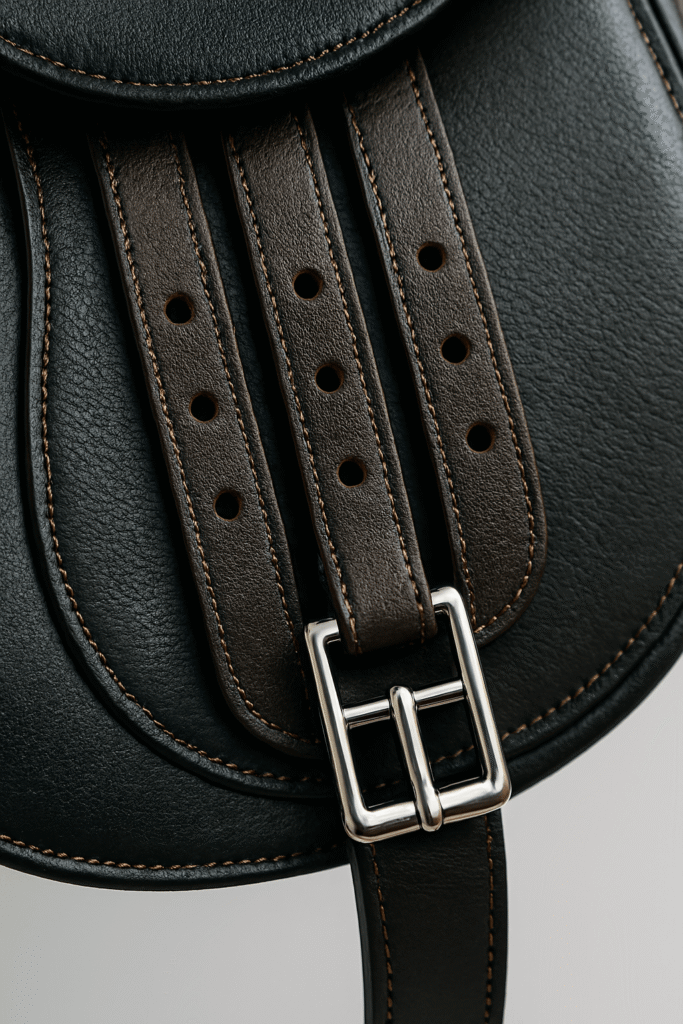
2. Billet & Girth Dynamics
- Inspection: Measure elasticity and tension of all billets using standardized force meters. Check for signs of fatigue or uneven stretch.
- Regulatory Risk: Elastic fatigue results in uneven girth pressure, producing micro-resistances in the horse’s breathing rhythm. Such deviations are detectable by EquiTests biometric sensors and negatively impact the Harmony collective mark.
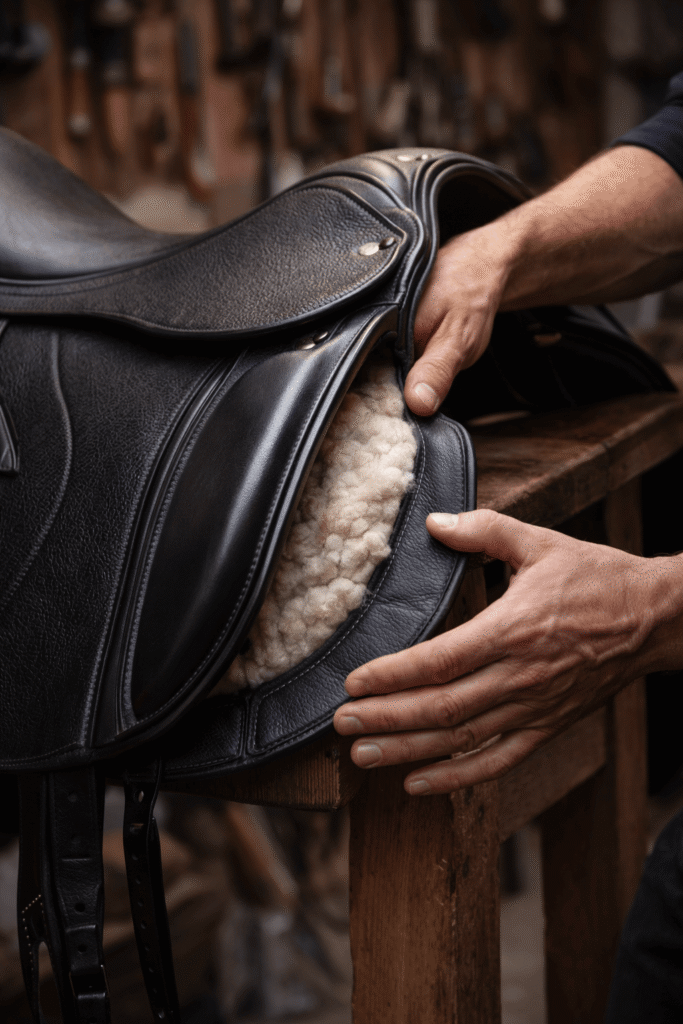
3. Asymmetric Flocking Audit
- Inspection: Assess panel density and padding uniformity using pressure mapping tools and manual compression tests.
- Regulatory Risk: Uneven panel flocking leads to unbalanced weight distribution. Judges record this as a “Lack of Straightness” deduction under collective marks.
4. Stitching & Seam Integrity
- Inspection: Examine all stress points around billets, panels, and stirrup bars for fraying or overstretched seams.
- Compliance Impact: Compromised seams increase risk of sudden saddle failure, impacting rider stability and potentially triggering immediate safety-related penalties.
5. Stirrup Bar Symmetry
- Inspection: Verify stirrup bar height, alignment, and rotational capacity on both sides. Use a laser level or precision ruler for measurement.
- Regulatory Risk: Misalignment causes “Seat Drift,” reducing rider effectiveness and leading to a direct deduction under the Rider Effectiveness collective mark.
6. Equiband Resistance Calibration
- Inspection: Measure elastic resistance in Newtons per Meter (N/m). Compare against manufacturer baseline and check for loss of tension over repeated cycles.
- Compliance Impact: Fatigued elastics can produce false positive readings of engagement or impulsion, misleading both riders and judges.
7. Digital Sensor Sync
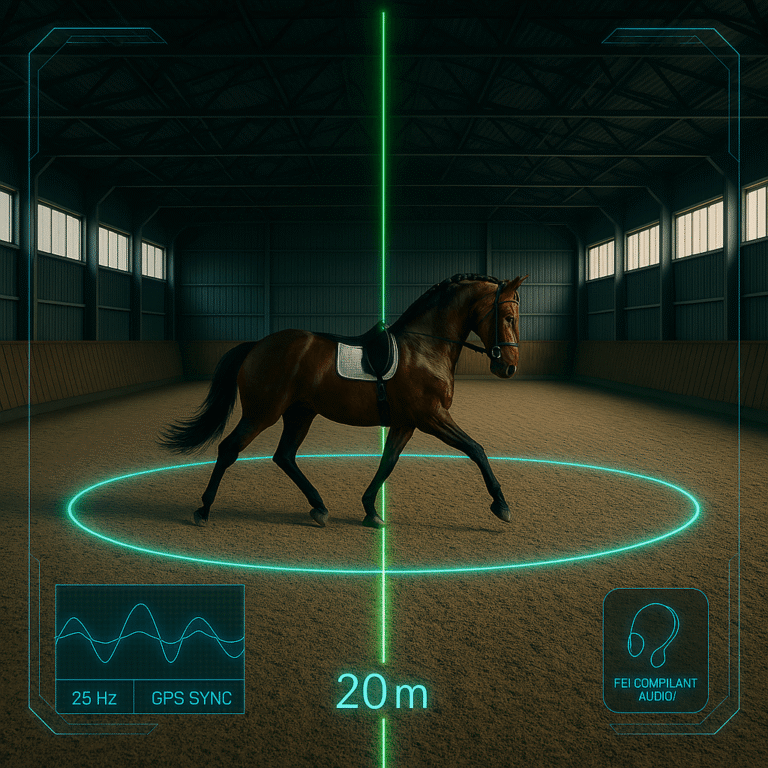
- Inspection: Align all IMU (Inertial Measurement Unit) sensors with the vertical axis of the arena. Verify sub-decimeter path accuracy using calibration grids and AR overlays.
- Regulatory Risk: Misaligned sensors yield incorrect kinematic feedback, compromising the validity of both collective mark and movement-specific scoring as defined in the EquiTests 2026: Precision Pattern Mastery via Kinematic Spatial Mapping.
The Mathematics of Defeat – A 1.6% Score Shift Case Study
Understanding the Coefficient Cascade in 2026 Championship Scoring
The Scenario
During a Training Level 20m Trot Circle (Coefficient 2), a diagonal drift occurs, resulting in a -2 point deduction from the judge for a lack of “Straightness.”
The Audit Breakdown
- Direct Loss: -2 points × coefficient 2 = -4 points lost.
- Percentage Impact: On a standard 250-point test, this equates to a 1.6% immediate reduction.
The “Cascade” Reality (The Compound Effect)
- If a rider incurs three similar minor errors in high-coefficient movements (e.g., Free Walk and 20m Circle), total loss = 12 points.
- Percentage Impact: 12 ÷ 250 × 100 = 4.8% reduction from total score.
Leaderboard Consequence (2026 Audit)
- Standard Performance: 72.5% (Podium/Gold Level).
- With Coefficient Cascade: 67.7% (Mid-pack/12th Place).
Verification Strategy
- This 4.8% gap represents the difference between Elite Ranking and a participation-level result.
- Use the [EquiCalc 2026] Precision Engine to model cascading deductions during schooling sessions.
- Identify high-coefficient movements where small errors are disproportionately affecting the overall season average, and target corrective training accordingly.
2026 USEF/USEA Eventing Dressage Integration
Audit of the 12 New Tests Effective December 1, 2025
The Regulatory Shift
The 2026 Eventing Dressage framework prioritizes Functional Submission over Aesthetic Collection. Judges are instructed to reward horses that maintain a Working Frame—demonstrating clear impulsion and steady tempo without the extreme vertical compression required in specialized Dressage.
Technical Compliance Differences
- Impulsion Dynamics: Emphasis on smooth transition from gallop-oriented stride to rhythmic dressage gait without loss of hindquarter engagement.
- Lateral Tolerances: Slightly relaxed bend requirements for versatility, but any shoulder-drift affecting the line of travel results in a penalty.
- Adaptability Metric: Frequent transitions test the horse’s “Mental Gear-Shifting,” critical for safety in subsequent jumping phases.
Strategic Training Integration
Riders should utilize [EquiCalc 2026] to monitor heart-rate recovery and gait symmetry during multi-discipline sessions, ensuring a relaxed frame does not induce asymmetric loading on the forehand. Data-driven monitoring supports compliance with 2026 standards and optimizes performance across dressage and Eventing components.
Semantic Bridges & Authority Integration
The USEF EquiTests 2026 framework is no longer a subjective exercise; it is a data-driven audit of horse welfare and rider efficacy. By integrating biomechanical Harmony marks with kinematic sensor verification, the USEF has effectively closed the gap between traditional judging and objective training reality.
The Path to Mastery
Success in the 2026 season requires more than memorizing patterns. Riders and auditors must understand the Coefficient Cascade and implement a rigorous 7-Point Hardware Audit to ensure equipment supports, rather than hinders, performance.
Authority Integration
- [EquiTests 2026 White-Paper]: Consult for AR/GPS kinematic verification standards and sensor calibration protocols.
- [EquiCalc 2026]: Utilize the precision engine to model score deductions and calculate percentage shifts in real-time.
This manual serves as the definitive reference for the 2026 competitive season. For real-time scoring updates and hardware compliance alerts, participants should join the EquiApps Technical Briefing for ongoing guidance and updates.